
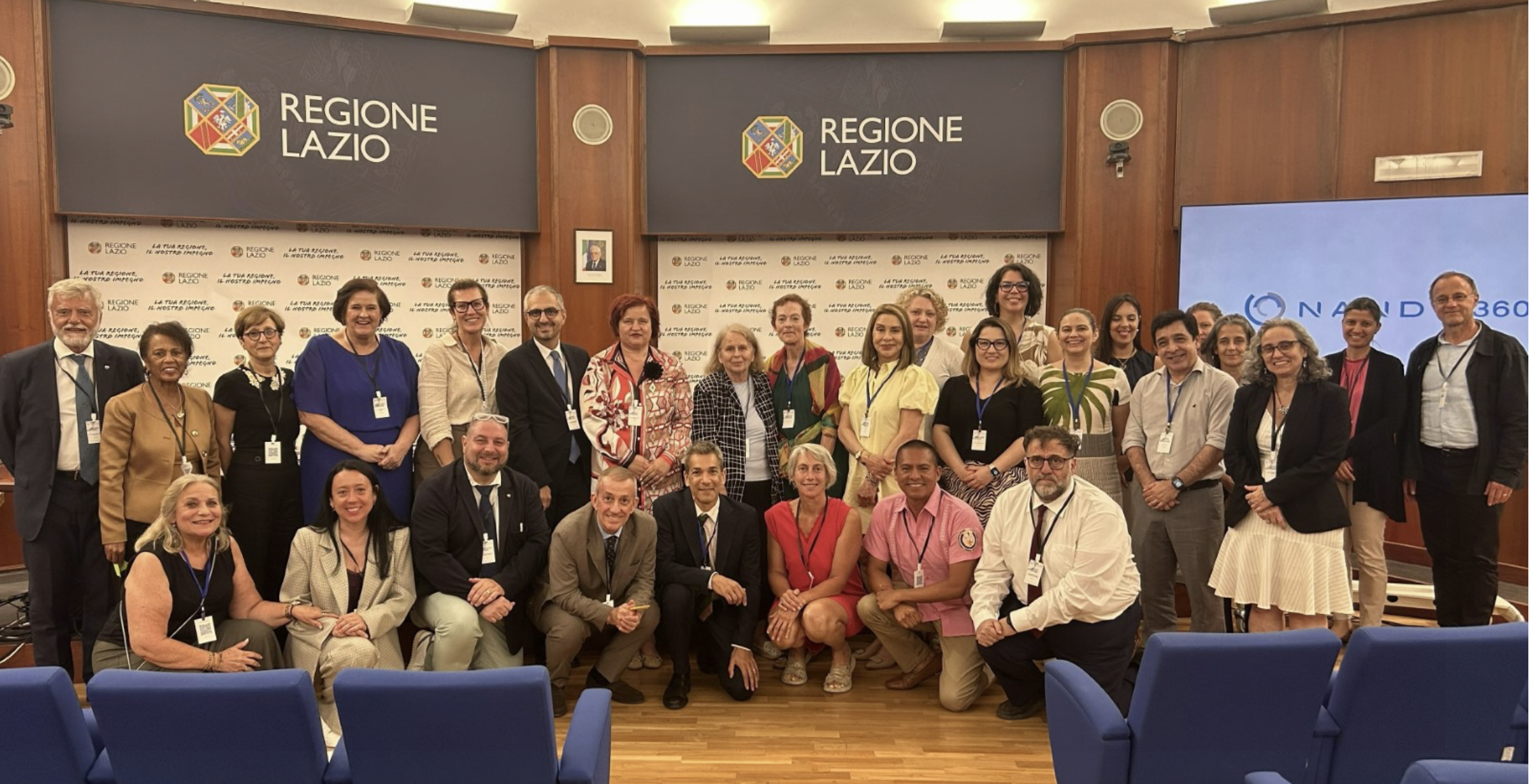
The NANDA 360 Institute, held in Rome in August 2026, was a unique and highly inspiring experience. It brought together stakeholders from different countries, professional backgrounds, and areas of healthcare, creating an international forum for information, exchange, reflection, and dialogue around the future of nursing knowledge and standardized nursing language.
One of the greatest strengths of the Institute was precisely the diversity of its participants. The discussions extended beyond nursing education and clinical practice to include perspectives from research, nursing informatics, professional organizations, policy, healthcare administration, and leadership. Bringing these different perspectives together demonstrated that the development and implementation of standardized nursing language is a shared responsibility and cannot be addressed by one professional group or one sector of healthcare alone.
A forum for information, dialogue and shared perspectives
The Institute was fundamentally an informative and collaborative experience. It provided stakeholders with an opportunity to learn about the vision and future direction of NANDA 360, while also creating a space for participants to exchange experiences, raise questions, and reflect on the implications for their own countries and professional contexts.
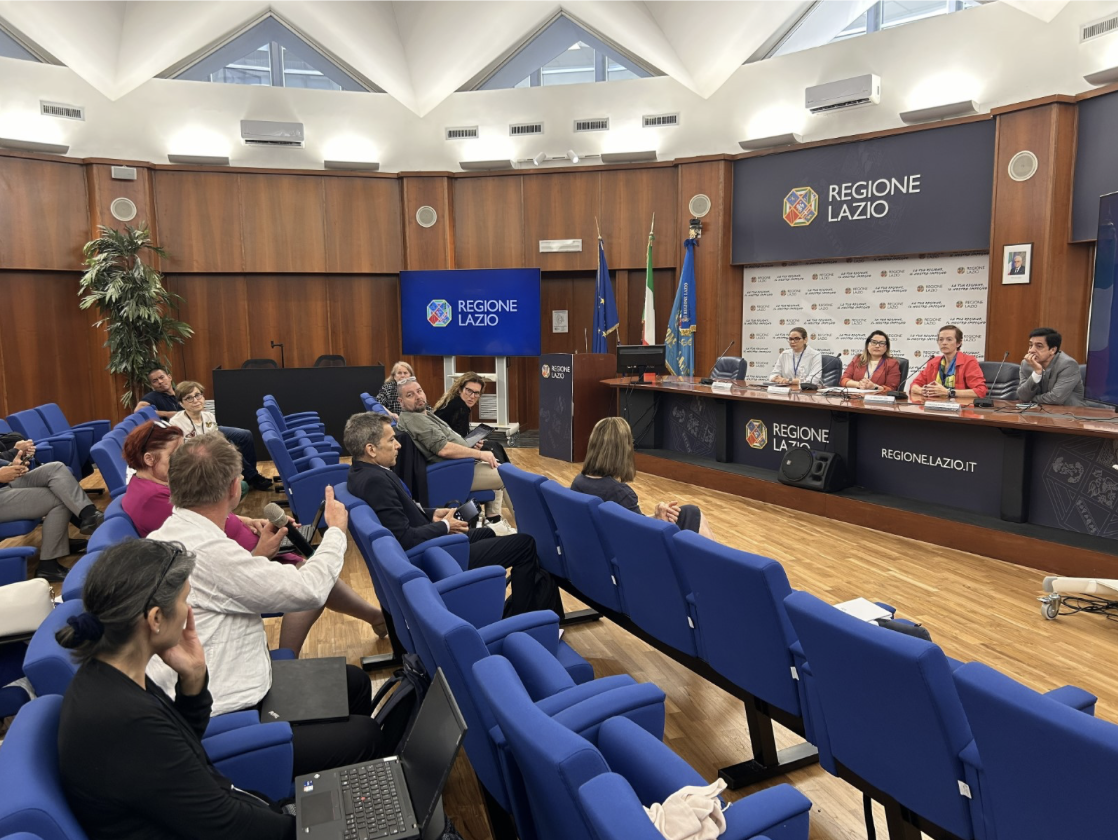
The international dimension was particularly valuable. Participants brought different healthcare systems, educational structures, organizational realities, and experiences with standardized nursing languages. This diversity enriched the discussions and demonstrated both the common foundations of nursing knowledge and the contextual considerations that need to be addressed when translating that knowledge into practice.
The Institute therefore went beyond the presentation of a new initiative. It created a community in which different stakeholders could begin to consider together what NANDA 360 could mean for nursing and healthcare in different settings.
Implications for nursing education and clinical practice
Although the Institute was not specifically an educational programme, its implications for nursing education were significant. It highlighted the importance of preparing current and future nurses to understand standardized nursing language and to use it as part of professional nursing knowledge and clinical reasoning.
Education has a key role in ensuring that developments in nursing terminology and classification are translated into meaningful learning and eventually into professional practice. Educators need to be involved in understanding these developments and considering how they can be integrated into curricula, clinical learning, and the preparation of nurses for contemporary healthcare environments.
At the same time, the discussions highlighted the relevance of NANDA 360 to clinical practice. Standardized nursing language can support clearer communication, strengthen the visibility of nursing contributions, improve the documentation of nursing care, and facilitate the generation and use of meaningful nursing data.
The relationship between education and practice is therefore essential. Educational institutions prepare nurses to use nursing knowledge, while clinical environments provide the context in which that knowledge is applied, evaluated, and further developed. A sustained dialogue between both areas will be essential for the successful evolution of NANDA 360.
The critical role of policy and administration
One of the important messages emerging from the Institute was that the future of standardized nursing language cannot be considered solely at the level of individual nurses or educational institutions. Policy and administration are essential to creating the conditions in which nursing knowledge can be implemented, sustained, measured, and valued.
At the policy level, recognition of nursing language and nursing data can contribute to making nursing contributions more visible within health systems. Policies that support the systematic documentation and use of nursing data can facilitate the integration of nursing knowledge into broader health information systems and decision-making processes.
At the organizational and administrative level, leadership is equally important. Implementation requires more than introducing terminology into a documentation system. It requires organizational commitment, appropriate resources, technological infrastructure, professional development, governance, and mechanisms for evaluating outcomes.
Healthcare administrators and nursing leaders therefore have an important role in creating environments in which standardized nursing language can become part of routine practice rather than remaining an isolated initiative. Their decisions can influence how nursing documentation is designed, how electronic health records capture nursing information, how staff are supported during implementation, and how nursing-sensitive outcomes are recognized and evaluated.
The involvement of policy makers and administrators is also important because standardized nursing language has implications beyond documentation. High-quality, structured nursing data can contribute to understanding nursing workload, demonstrating nursing contributions to patient outcomes, supporting quality improvement, informing workforce planning, and strengthening the visibility of nursing within health systems.
The Institute consequently reinforced the importance of viewing NANDA 360 as a development that has relevance at multiple levels: the individual nurse, the clinical team, the educational institution, the healthcare organization, and the wider health system and policy environment.
The value of bringing stakeholders together
The presence of stakeholders from different areas and countries was therefore particularly significant. Education, clinical practice, research, informatics, policy, administration, and professional leadership each provide a different perspective, but none can achieve sustainable change in isolation.
The Institute demonstrated the value of creating a space where these perspectives could meet. Such dialogue can help identify common challenges, understand differences between healthcare contexts, and explore opportunities for collaboration.
It also reinforced the idea that the future of nursing language is not only a technical or professional issue. It is also an organizational and strategic issue. Decisions made by institutions and health systems will influence whether nursing knowledge is effectively captured, used, evaluated, and translated into improvements in care.
A strong impression on the invitees
The Institute made a strong and lasting impression on the invitees. The quality of the information, the diversity of perspectives, the international representation, and the opportunity for open discussion created an especially stimulating environment.
Participants had the opportunity to look beyond their own professional and national contexts and to consider the broader implications of NANDA 360. The enthusiasm generated during the Institute demonstrated the interest among stakeholders in continuing the conversation and exploring how the initiative could develop in different settings.
The value of the Institute was therefore not only in what was presented, but also in the relationships and connections created. Bringing together people with different responsibilities and perspectives created the foundations for future collaboration.
The importance of continuity
The experience in Rome also highlighted the importance of ensuring continuity. An initiative that brings together such a diverse international community should not be viewed as a one-time event. The momentum generated by the Institute needs to be maintained and developed.
Continuity will allow stakeholders to continue exchanging experiences, discussing implementation challenges, learning from different countries and organizations, and exploring new opportunities. It will also allow the lessons emerging from the Rome experience to inform future initiatives.
In this context, the work of INKA and the Education Committee is particularly important. Their commitment to supporting the continuity of NANDA 360 can help maintain the network created in Rome and provide opportunities for continued dialogue, collaboration, and development.
The Education Committee has an important role in ensuring that the implications for nursing education remain visible and that educators continue to be engaged. At the same time, continuity needs to involve the wider stakeholder community, including clinical leaders, researchers, informatics specialists, policy makers, administrators, professional organizations, and other partners.
Looking beyond Rome
The NANDA 360 Institute in Rome can therefore be seen as the beginning of an ongoing international conversation about nursing knowledge and standardized nursing language.
Its greatest strength was the opportunity to bring together stakeholders from different countries and different areas of healthcare around a shared interest in the future of nursing. The experience demonstrated that progress will require collaboration across education, clinical practice, research, informatics, policy, administration, and professional leadership.
The challenge now is to maintain the momentum created in Rome. Continuity will be essential to transform the enthusiasm and ideas generated during the Institute into sustained collaboration and meaningful developments in nursing.
For nursing education, this means preparing nurses to understand and use evolving nursing knowledge. For clinical practice, it means supporting the consistent application and evaluation of that knowledge. For research and informatics, it means generating and using high-quality nursing data. And for policy and administration, it means creating the structures, resources, systems, and strategic commitment that allow nursing knowledge to be recognized and embedded within healthcare systems.
The Rome Institute should therefore not be regarded as an isolated event, but as the beginning of a continuing process. The ongoing collaboration of INKA, the Education Committee, and the wider international community of stakeholders will be fundamental to keeping this process alive.
Rome brought together a diverse community around a shared vision for the future of nursing knowledge. The responsibility now is to maintain that connection and transform the dialogue initiated in Rome into continued collaboration, innovation, and impact across nursing education, clinical practice, research, policy, and healthcare administration.
About the Authors
Dr. Míriam Rodríguez-Monforte, RN, PhD, is an Associate Professor of Community Nursing and Clinical Placements Coordinator at the Blanquerna School of Health Sciences, Ramon Llull University, in Barcelona, Spain. She serves as President-Elect of the International Nursing Knowledge Association (INKA). Her clinical background is in community nursing, and her research interests include standardized nursing languages, nursing leadership, educational innovation, and health and wellbeing across the lifespan. She is actively involved in international research collaborations aimed at advancing nursing knowledge, education, and professional practice.
Prof. Carme Espinosa, RN, MSc, is Education Director of the International Nursing Knowledge Association (INKA) and a former NANDA International President (2020–2023). Named a NANDA-I Fellow in 2016, she has extensive experience in nursing education, clinical reasoning, standardized nursing languages, and health informatics. She has contributed to several INKA committees and international initiatives and continues to support the development and application of nursing knowledge through education, research collaboration, translation, and professional engagement.
Comments (0)
Leave a comment