Login Cart

Our Story

Cart Login Join INKA

Defining the Knowledge of Nursing

Words That Shape Nursing Practice

Words are powerful. They allow us to communicate ideas, experience, and understanding so that others may share in what we know.

In nursing, the words we use matter deeply. They shape communication with patients, colleagues, other disciplines, and healthcare systems. They also shape how nursing is represented as a profession and discipline.

Nursing diagnoses communicate the professional judgments that nurses make every day. Patient goals guide the care process through expected human responses, and patient outcomes reflect observed responses achieved through nursing care. Nursing actions are intentional interventions implemented by the nurse to address health situations represented by nursing diagnoses.

Together, these classifications define what nurses know, how nurses reason clinically, and how nursing contributes uniquely to care.

In academic and informatics literature, these structured systems are often described collectively as standardized nursing language (SNL). INKA (formerly NANDA ® International) contributes to this global body of work through the development and stewardship of assessment driven, diagnosis-centered nursing classifications and a clinical reasoning framework that supports consistent documentation and nursing knowledge development.

INKA exists to support global consistency and evidence-based development of nursing knowledge through standardized classifications and our clinical reasoning framework.
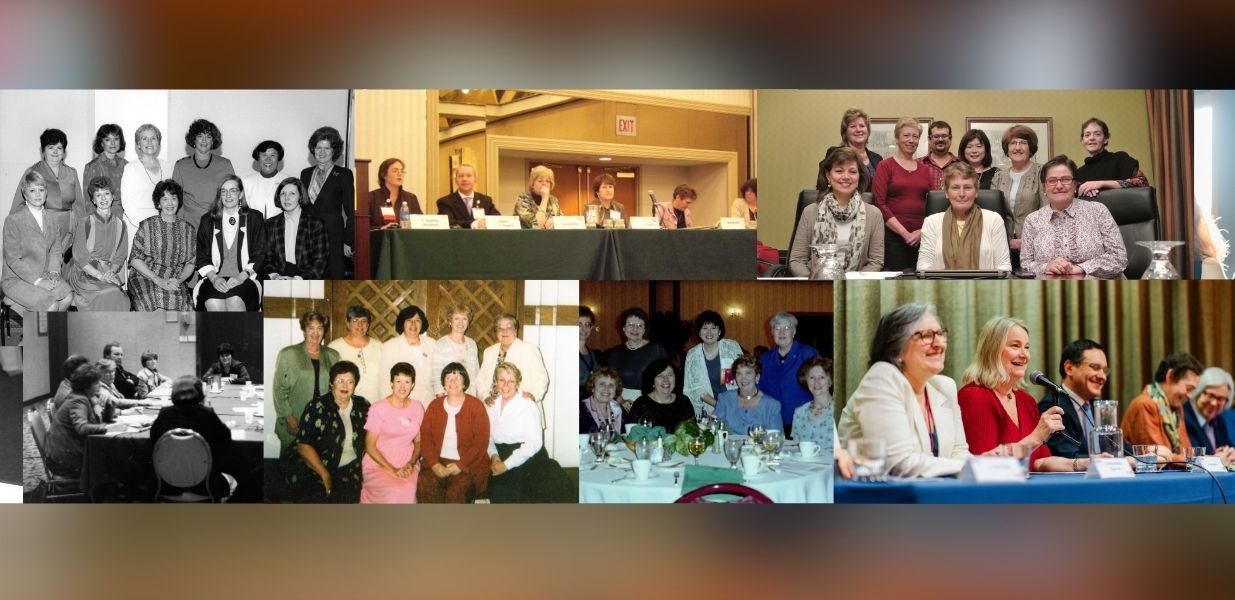
collage of historical INKA images

Our History

INKA’s story is rooted in the work of pioneering nurse scholars who recognized the need for a shared professional language to describe clinical judgments made by professional nurses.

The origins of this effort trace back to the First National Conference on the Classification of Nursing Diagnoses, convened in St. Louis in 1973. Outcomes of the conference included the establishment of the St. Louis University Clearinghouse for Nursing Diagnoses, adoption of the acronym “NANDA,” and the formation of regional chapters that helped organize early collaborative work across the United States.

This work represented the first sustained effort to systematically develop, define, and classify nursing diagnoses as a distinct body of professional nursing knowledge. Key figures including Drs. Kristine Gebbie and Mary Ann Lavin helped establish the foundation for standardized nursing diagnosis classification, now widely recognized as part of standardized nursing language (SNL), to support practice, research, and education internationally.

Dr. Marjory Gordon was elected President of the emerging NANDA organization in 1978 and played a central leadership role in advancing nursing diagnosis development.

The organization was formally established in 1982 as the North American Nursing Diagnosis Association (NANDA).

As membership and influence expanded globally, the Association adopted the name NANDA International in 2002, reflecting its international scope and mission.

In June 2016, during the NANDA-I Conference in Cancun, Mexico, the membership voted overwhelmingly to begin a multi-year transition toward a new organizational name.

In May 2026, NANDA International became the International Nursing Knowledge Association (INKA). Under this name, INKA continues to publish and develop the expanded NANDA 360 classifications in support of nursing knowledge development worldwide.

Read More Read Less
NANDA-I and INKA logos

Our Name and International Evolution

Prior to 2002, “NANDA” was an acronym for the North American Nursing Diagnosis Association. However, this is no longer the name or scope of the organization.

The term “NANDA” has been retained because of its familiarity within the nursing profession and is best understood today as a longstanding brand identifier rather than an acronym.

In May 2026, NANDA International completed its transition to the International Nursing Knowledge Association (INKA), reflecting the organization’s continued global commitment to defining and advancing nursing knowledge through standardized classifications and clinical reasoning.

For accuracy, we respectfully request that the organization not be referred to as the North American Nursing Diagnosis Association except when discussing historical developments prior to 2002.

Suggested Next Step

To learn more about INKA’s work in nursing knowledge development:

Join INKA

Join INKA and connect with a global network of nurses and leaders, committed to advancing nursing knowledge and practice.

Join INKA