
Editor’s Note
As part of our Gordon Scholar series and our August focus on Nursing Education, Dr. Ana Choperena explores the evolving role of artificial intelligence as an adjunct to clinical reasoning. Rather than replacing nursing judgment, she argues that AI should be thoughtfully integrated into nursing education to strengthen critical thinking, ethical decision-making, and person-centered care in an increasingly technology-enabled healthcare environment.
Artificial Intelligence as an Adjunct to Clinical Reasoning in Nursing Education
Artificial intelligence (AI) is rapidly transforming healthcare, influencing everything from clinical documentation and diagnostic support to predictive analytics and workflow efficiency. As these technologies become increasingly embedded in clinical practice, nursing education has an important responsibility: preparing future nurses to use AI effectively while preserving the professional judgment, ethical reasoning, and compassionate care that define nursing.
Rather than viewing AI as a replacement for clinical reasoning, educators should position it as a cognitive adjunct, a tool that supports learning, challenges thinking, and encourages deeper clinical inquiry. Used thoughtfully, AI can enhance students’ ability to analyse complex information while reinforcing that responsibility for clinical decisions always remains with the nurse.
AI as a partner in clinical reasoning
Clinical reasoning requires nurses to gather information, interpret patient data, consider alternatives, anticipate complications, and make sound clinical decisions. These are complex cognitive processes developed through education, experience, and reflection.
AI has the potential to enrich this learning process by serving as a sophisticated thought partner. Through real-time data synthesis and predictive analytics, AI can expose students to multiple perspectives, prompting them to refine diagnostic hypotheses, anticipate patient deterioration, and develop evidence-based nursing interventions.
The educational value lies not in accepting AI-generated recommendations at face value, but in questioning them. Asking Why has the AI suggested this intervention? Does the available evidence support it? Would I make the same clinical decision? encourages students to strengthen their own reasoning while recognising both the capabilities and limitations of emerging technologies.
Creating richer learning experiences
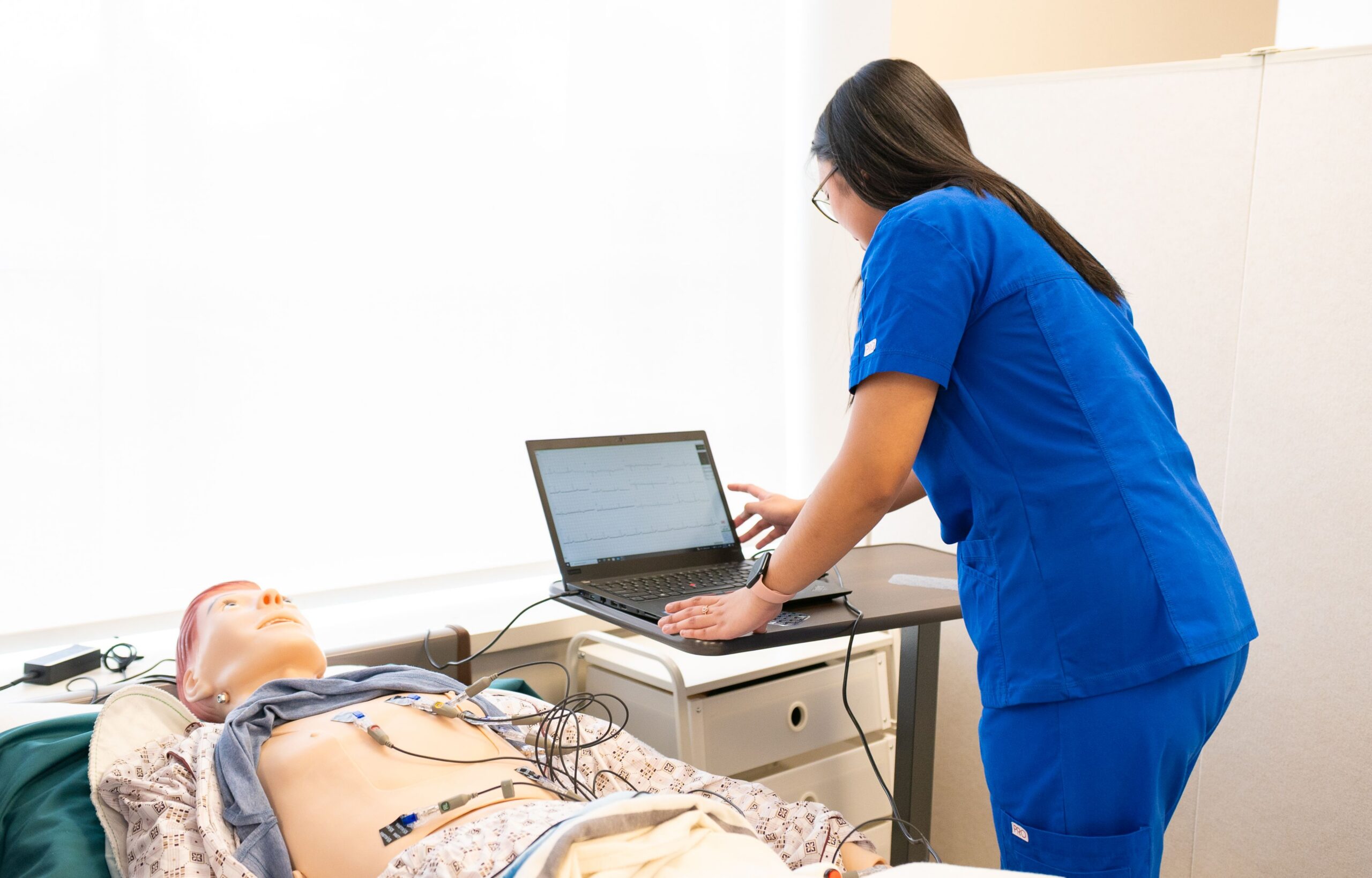
Simulation has long been recognised as an essential component of nursing education. Generative AI offers exciting opportunities to further enhance these learning experiences by creating highly dynamic and adaptive clinical scenarios.
Instead of relying on a limited number of static case studies, educators may be able to generate diverse patient presentations that expose students to rare conditions, rapidly deteriorating patients, or complex co-morbidities. These high-acuity, low-frequency situations are difficult to replicate consistently in clinical placements but are invaluable for developing confidence and pattern recognition.
By broadening the variety of clinical experiences available in a safe learning environment, AI has the potential to accelerate experiential learning while allowing students to practise decision-making before encountering similar situations in clinical practice.
Developing critical thinkers, not technology-dependent clinicians
Perhaps one of the most important educational challenges is ensuring that AI strengthens rather than weakens clinical reasoning.
Future nurses must learn to critically evaluate AI-generated insights rather than simply accepting them as correct. Like any clinical resource, AI is only as reliable as the information and algorithms on which it is built. Biases in training data, incomplete information, and limitations in algorithm design can all influence the recommendations AI provides.
For this reason, nursing curricula should deliberately teach students to critically interrogate AI outputs, compare recommendations with current evidence and clinical guidelines, and recognise when technology may be inaccurate or inappropriate. These skills are rapidly becoming essential professional competencies.
By learning to question AI rather than depend upon it, graduates will be better equipped to practise safely in increasingly technology-enabled healthcare environments.
Preserving the humanistic core of nursing
While AI can process enormous amounts of information in seconds, it cannot replace the human dimensions of nursing practice.
Compassion, empathy, ethical deliberation, therapeutic communication, and the ability to recognise subtle emotional or behavioural cues remain uniquely human capabilities. Patients do not simply require accurate clinical decisions, they also need understanding, reassurance, advocacy, and meaningful relationships with those providing their care.
The goal, therefore, is not to make nursing more technological for its own sake. Instead, AI should be used to reduce cognitive burden and administrative workload where appropriate, allowing nurses to spend more time where they are needed most: with patients and families.
As educators prepare students for future practice, it is essential that technological competence develops alongside, rather than at the expense of, the values that have always defined the nursing profession.
Preparing nurses for the future
The integration of AI into nursing education is no longer a question of if, but how.
Our responsibility as nurse educators is not to produce graduates who rely on technology for answers. Rather, we must cultivate reflective, analytical practitioners who understand both the opportunities and limitations of AI and who remain accountable for every clinical decision they make.
When integrated thoughtfully into nursing education, AI can become a powerful tool for inquiry, reflection, and lifelong learning. Used in this way, it has the potential to strengthen both the science of clinical reasoning and the art of compassionate, person-centred nursing, ensuring that tomorrow’s nurses are prepared to navigate an increasingly complex healthcare landscape without losing sight of what matters most: the people in their care.
About the Author
Ana Choperena is an Assistant Professor at the University of Navarra in Spain and a member of the current cohort of Gordon Scholars in The Marjory Gordon Program for Knowledge Development, Clinical Reasoning & Decision Making. Through this international program, a collaboration between the International Nursing Knowledge Association and the Boston College Connell School of Nursing, Gordon Scholars work with mentors and colleagues from around the world to advance assessment-driven, diagnosis-centered nursing knowledge and clinical reasoning, and NANDA 360. The Gordon Scholars’ work has informed practice, scholarship, policy, and instruction worldwide. Ana’s current work focuses on her position as a Dean, and her research and teaching in person centered practice and nursing history, with particular interest in nursing terminologies.
Comments (0)
Leave a comment