
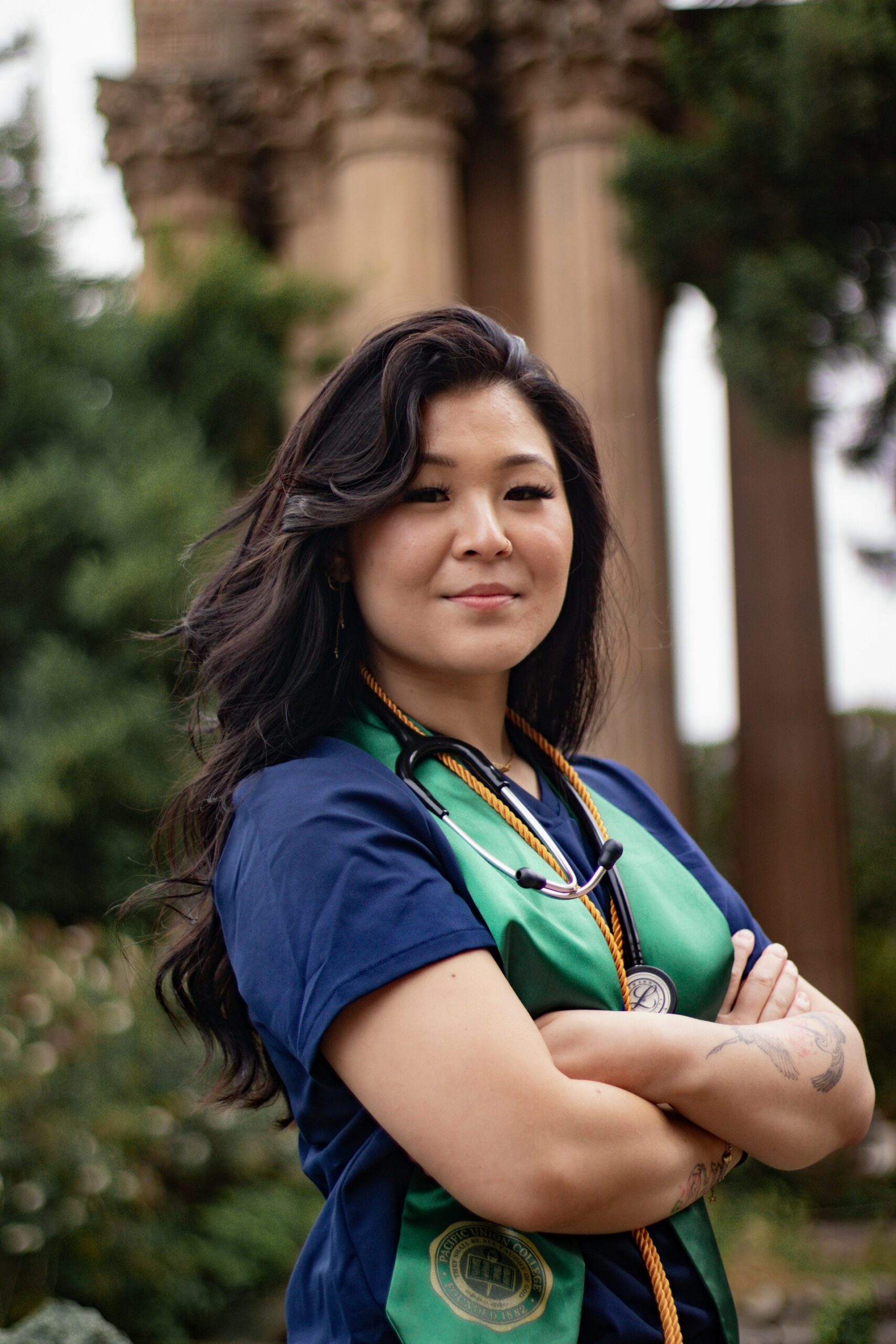
Evidence-based nursing begins with a fairly simple idea: the decisions nurses make should be informed by the strongest knowledge available.
Putting that idea into practice is much more complex.
Evidence has to be generated through research. Existing knowledge must be evaluated and tested. Findings need to be shared, scrutinized, and built upon. Educators need to help students learn how to reason using evidence-based nursing knowledge from research. Nurses in clinical practice need to be able to use that knowledge alongside their expertise, professional judgment, and understanding of the individual person receiving care.
And increasingly, nursing knowledge also needs to be represented in ways that allow it to become part of the data shaping healthcare.
Throughout September, our social content at the International Nursing Knowledge Association (INKA) will explore these different dimensions of evidence-based nursing and the people, processes, and collaborations that help strengthen the science behind practice.
Why Evidence-Based Nursing Matters
Nursing is full of decisions.
What assessment findings are significant? What do they mean? Which human response requires nursing attention? What outcome are we trying to achieve? Which nursing actions are most appropriate? How did the patient respond, and what should we do next?
Evidence helps nurses make those decisions from a stronger foundation.
It allows us to question assumptions, test what we think we know, identify where knowledge remains uncertain, and refine care as new research emerges.
The same principle applies to nursing knowledge itself.
Nursing diagnoses, for example, should continue to be researched, validated, reviewed, and refined. Nursing actions need evidence supporting their effectiveness. Patient outcomes give us another source of information about whether the care provided achieved what was intended.
Evidence-based nursing therefore involves an ongoing relationship between what we know, what we do, and what we learn from what happens next.
Evidence Connects Education, Practice, and Research
That relationship begins well before a nurse enters independent practice.
In nursing education, students need opportunities to develop clinical reasoning rather than simply memorize terminology, blindly follow an algorithm, or complete documentation exercises. Nursing diagnosis can help learners practice moving from assessment findings to a defensible clinical judgment: recognizing patterns, weighing alternatives, deciding what matters most, and revising their thinking when new evidence appears.
In clinical practice, those reasoning skills help nurses connect what they observe with the human responses requiring attention, choose appropriate nursing actions, establish meaningful goals, and evaluate how the patient responds.
Research then allows us to study those relationships more systematically. We can investigate whether diagnostic indicators accurately represent particular human responses, which nursing actions are associated with better outcomes, whether findings hold across populations and care settings, and where our existing knowledge needs further development.
Each area strengthens the others.
Education prepares nurses to reason with evidence. Practice puts nursing knowledge to work in real situations. Research allows us to examine, test, and strengthen what we know. New evidence can then inform what we teach and how we practice.
That is one of the ways nursing science continues to develop.
Evidence Also Has to Be Usable
There is another part of this conversation that is becoming increasingly important: informatics.
Evidence may exist, and high-quality nursing care may be taking place, but if nursing documentation cannot be represented consistently within electronic health information systems, much of nursing’s contribution can remain difficult to identify in aggregated healthcare data.
Earlier this year, NANDA ® International, Inc., now the International Nursing Knowledge Association (INKA), and SNOMED International announced a five-year collaboration agreement intended to support working practices that facilitate the use and interoperability of terminology standards produced by both organizations.
Interoperability allows different health information systems using electronic health records to exchange clinical data and enables systems, applications, and devices to access, integrate, and use that information in a coordinated way across organizations, regions, and countries.
For nursing, this has significant implications.
Nursing assessment findings, nursing diagnoses, nursing actions, and patient goals all represent meaningful parts of nursing care. Mapping NANDA 360 terms to SNOMED CT provides a terminology layer that can allow NANDA 360 content to be represented in a machine-computable form for interoperability.
Why does that matter for evidence-based nursing?
Because the evidence generated through nursing practice becomes much more useful when the data representing that practice can be structured, encoded, exchanged, and analyzed.
Our Director of Informatics makes this connection particularly clearly: nursing work remains largely invisible within aggregated healthcare data, even though the complexity of nursing practice can be represented through standardized nursing languages. For nursing documentation to contribute fully to quality measurement, research, clinical decision support, artificial intelligence, and health policy, it needs to become structured, encoded, and interoperable.
This creates possibilities that extend well beyond documentation.
If nursing assessment, diagnoses, actions, and outcomes can be represented consistently in data, researchers can investigate relationships that are difficult to study when nursing judgment remains buried in narrative notes or represented only as completed tasks.
We can ask stronger questions about nursing care.
Which nursing actions are associated with better outcomes for people with particular nursing diagnoses?
Which assessment findings are most strongly associated with specific human responses?
Do those relationships differ across populations, settings, or countries?
What can patterns in nursing data teach us about deterioration, recovery, care complexity, or nursing-sensitive outcomes?
And as healthcare increasingly incorporates artificial intelligence and predictive analytics, another question becomes unavoidable:
Will nursing knowledge be represented in the data those systems learn from?
Building a Stronger Evidence Base for Nursing
Evidence-based nursing therefore reaches across the profession.
It can look like a researcher validating a nursing diagnosis.
It can look like an educator helping a student explain why one diagnostic hypothesis is better supported than another.
It can look like a clinical practice nurse selecting an evidence-informed nursing action and evaluating whether the patient achieved the intended outcome.
It can look like scholars publishing their findings so others can scrutinize and build upon them.
And it can look like healthcare organizations and electronic health record vendors making nursing knowledge visible and usable within the digital systems increasingly shaping healthcare.
These are connected parts of the same larger effort.
We want nursing decisions to be supported by strong evidence.
We want nursing knowledge to continue developing as that evidence changes.
And we want the contribution of nursing to be visible enough that it can be studied, measured, taught, shared, and represented in the systems shaping the future of healthcare.
Throughout September, we will be looking more closely at each of these pieces.
Because the future of nursing will depend, in no small part, on the strength of the science and knowledge that support it.
Comments (0)
Leave a comment