
On a semi-regular basis, the blog will feature highlights from the NANDA® Archives at Boston College’s Burns Library. Visiting these documents allows us to reconnect with the scholars and practitioners whose work informed the foundations of NANDA-I. As NANDA-I continues to evolve, the Archives can help us root our language in its origins.
This month, we are highlighting the Fourth National Conference in 1980. All of the images and quotations from this post can be found at the Burns Library with the following citation: NANDA-I records, MS.1998.006, Fourth National Conference, Diagnoses 1980, 3/1. Among the Archives’ holdings related to the Fourth National Conference are proposed definitions and diagnoses, as well as historical reflections on the development of nursing nomenclature.
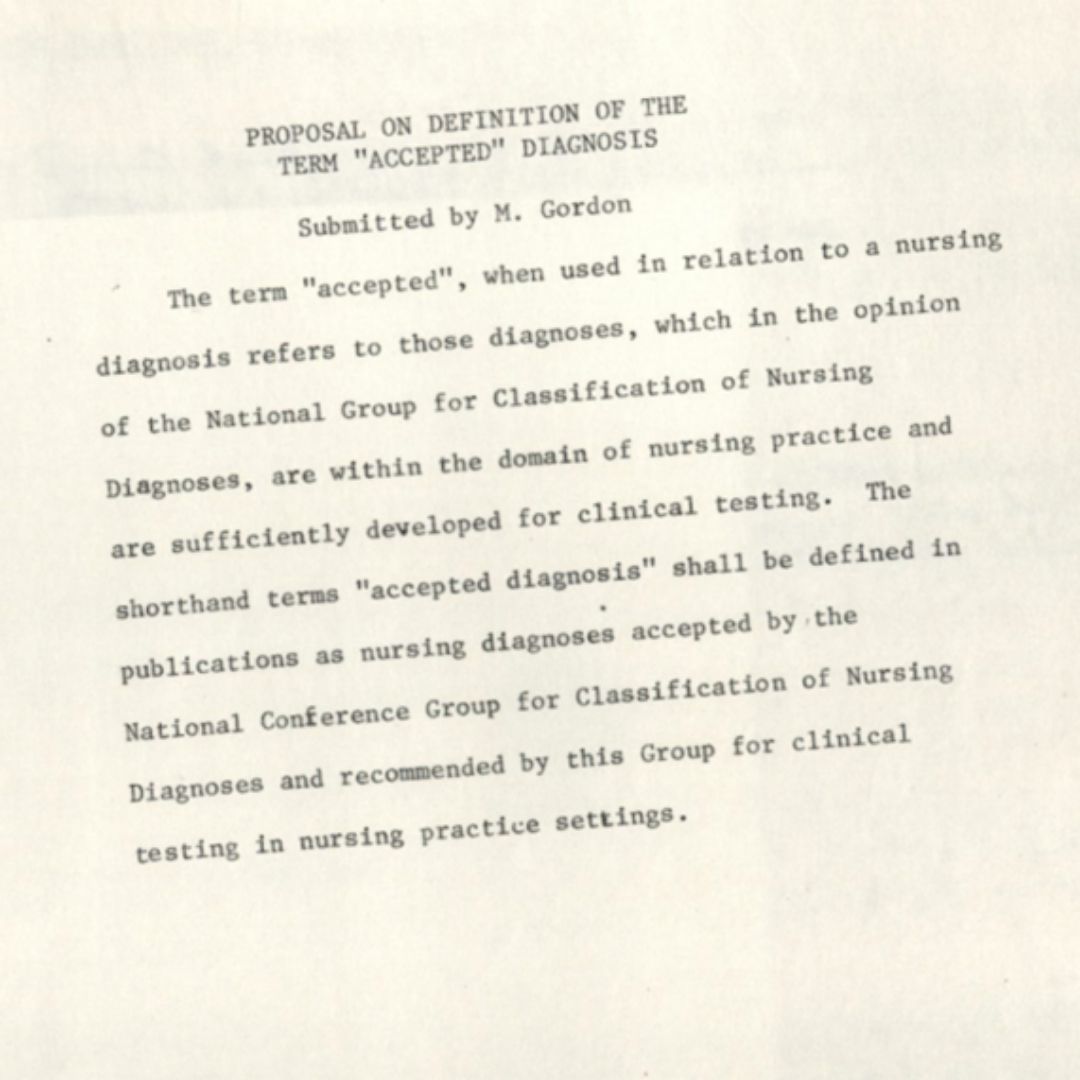
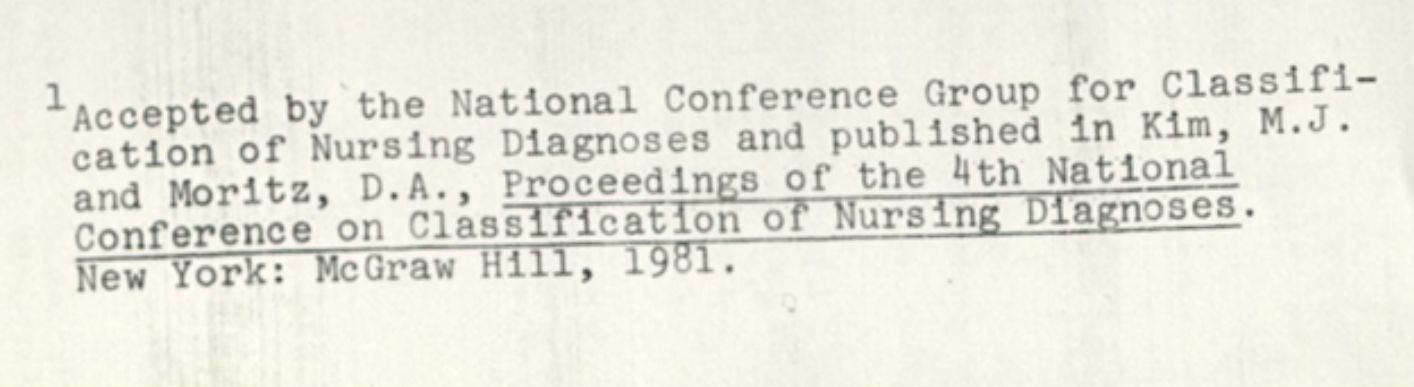
One such holding is a “Proposal on Definition of the Term ‘Accepted’ Diagnosis,” submitted by Dr. Marjory Gordon for inclusion in the conference packet that was distributed to attendees. The following quote and Image A include Dr. Gordon’s definition:
“The term ‘accepted’, when used in relation to a nursing diagnosis refers to those diagnoses, which in the opinion of the National Group for Classification of Nursing Diagnoses, are within the domain of nursing practice and are sufficiently developed for clinical testing. The shorthand terms ‘accepted diagnosis’ shall be defined in publications as nursing diagnoses accepted by the National Conference Group for Classification of Nursing Diagnoses and recommended by this Group for clinical testing in nursing practice settings.”
As an international organization that respects the power of language to foster inclusion across its membership and amplify clarity in practice and scholarship, it is informative to see how NANDA-I’s past leaders used explicit language to frame their efforts.
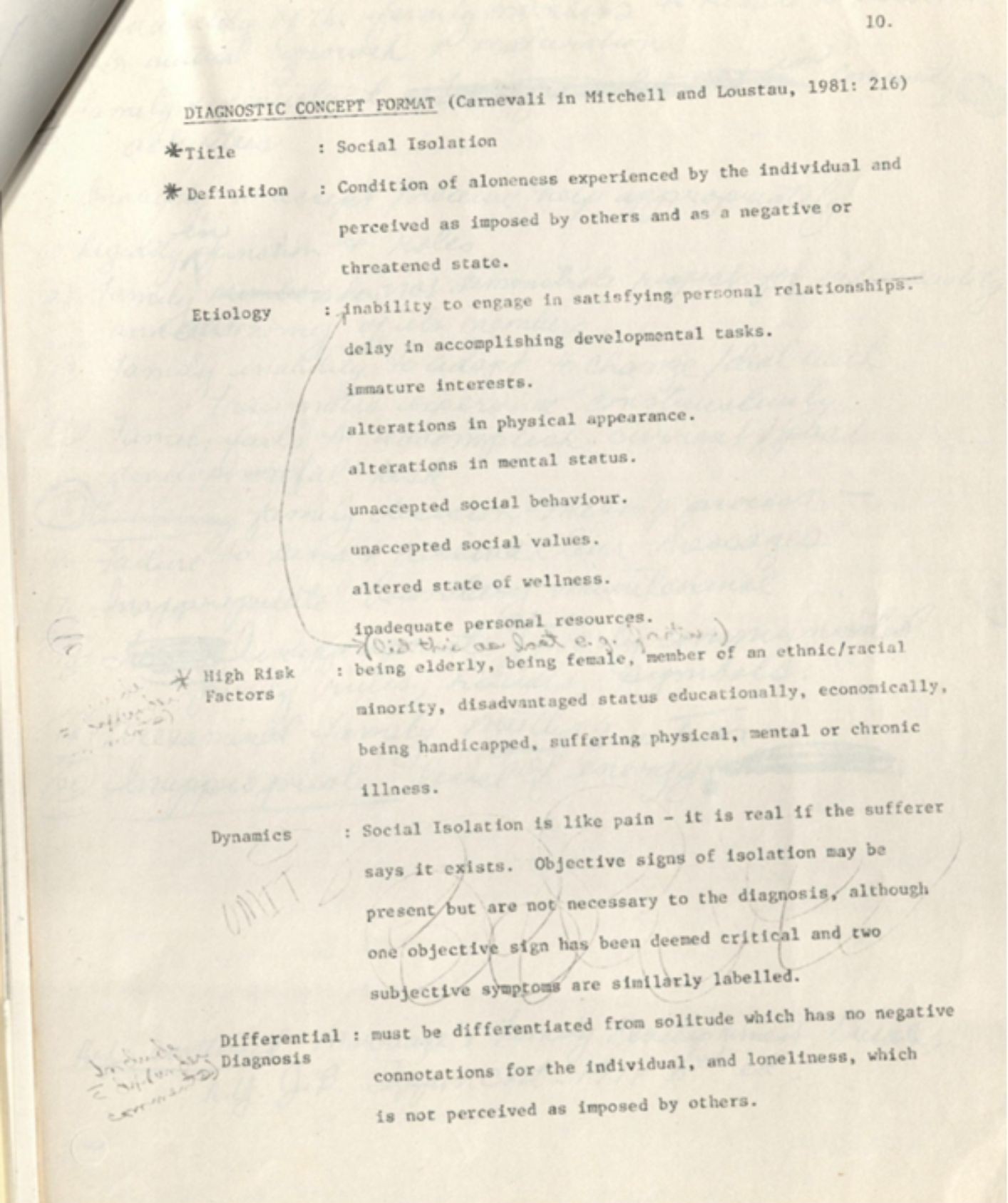
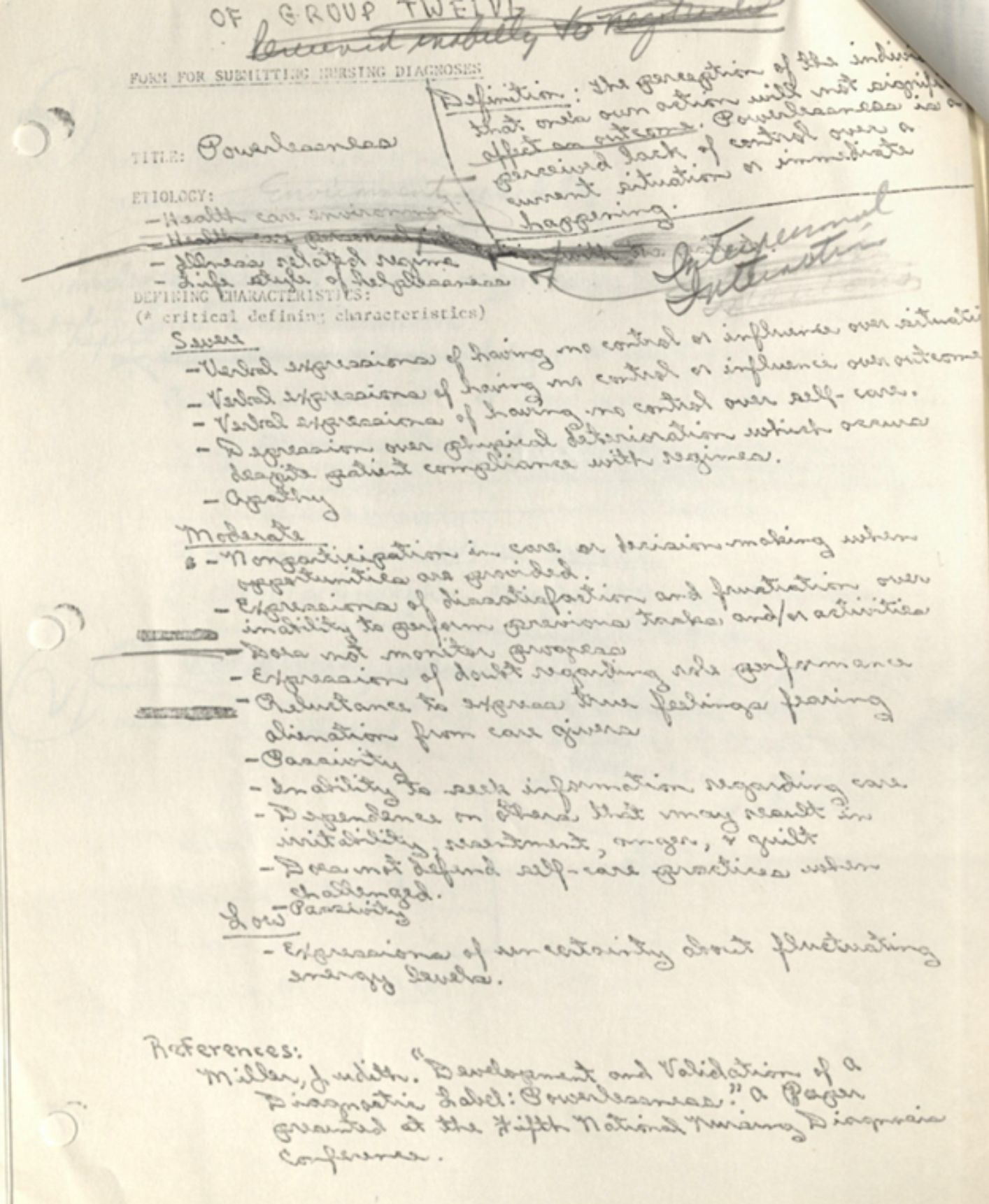
During the conference, attendees reviewed proposed diagnoses and provided feedback. Examples of this process include handwritten forms used to submit nursing diagnoses. The forms were structured in a diagnostic concept format described on page 10 of the conference packet. Each form for a proposed diagnosis included fields for the title, definition, etiology, defining characteristics, comments, and references. The following photo shows page 10 from the conference packet, followed by a copy of one of the handwritten forms that includes the potential diagnosis “Powerlessness.”
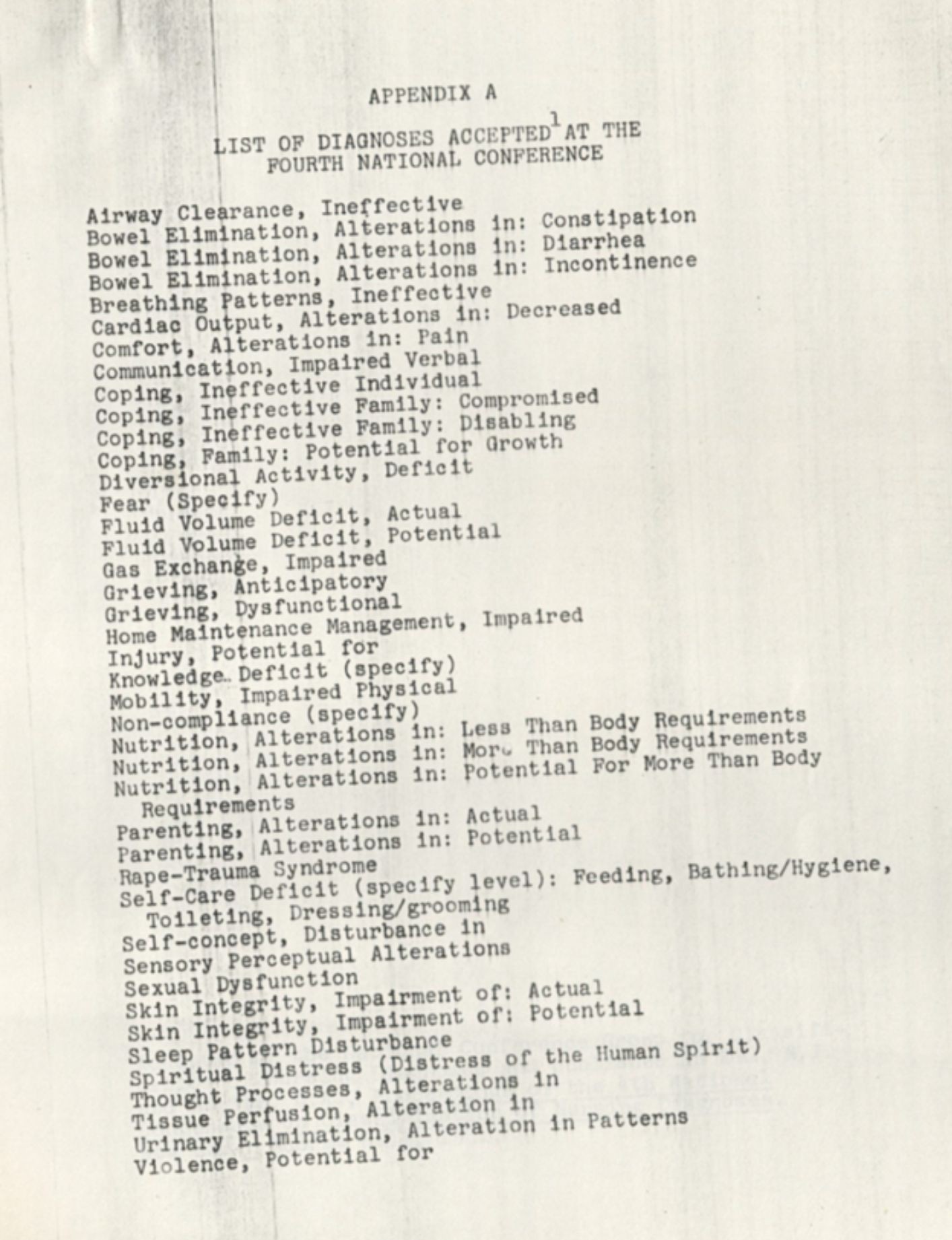
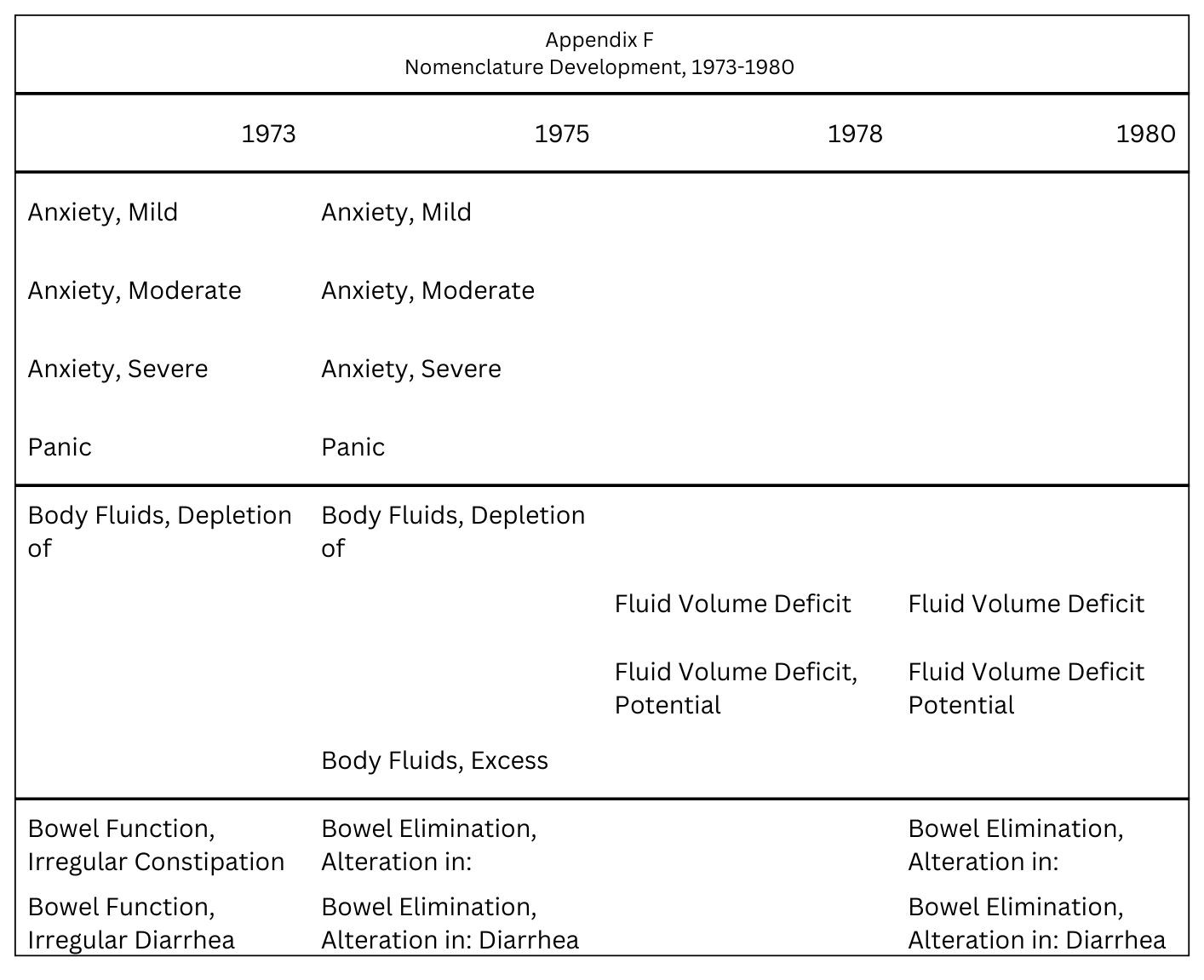
Appendix F represents one extremely valuable aspect of the NANDA Archives, a centralized repository of the evolution of nursing knowledge, diagnosis development, and nursing language. For Scholars interested in tracking the historical evolution of the field, the Archives contain untapped records and resources waiting for the right Scholar to share their story.
Connecting History to This Month’s Theme
The materials from the Fourth National Conference illustrate the careful work required to define and validate nursing diagnoses. By reviewing proposed diagnoses, clarifying definitions, and documenting defining characteristics and etiologies, early NANDA-I contributors were building the diagnostic knowledge base that nurses rely on today.
This month, as we highlight the NANDA 360 Clinical Reasoning Framework, these archival materials offer a reminder of the foundational work that made structured diagnostic reasoning possible. The framework focuses on helping nurses connect patient assessment findings with appropriate nursing diagnoses, an effort that continues the long-standing commitment within NANDA-I to support accurate and clinically meaningful diagnosis development.
Those who are interested in learning more about the NANDA Archives should email Dr. Natalie Borg, Assistant Director of the Marjory Gordon Program, at borgn@bc.edu.

Comments (0)
Leave a comment