
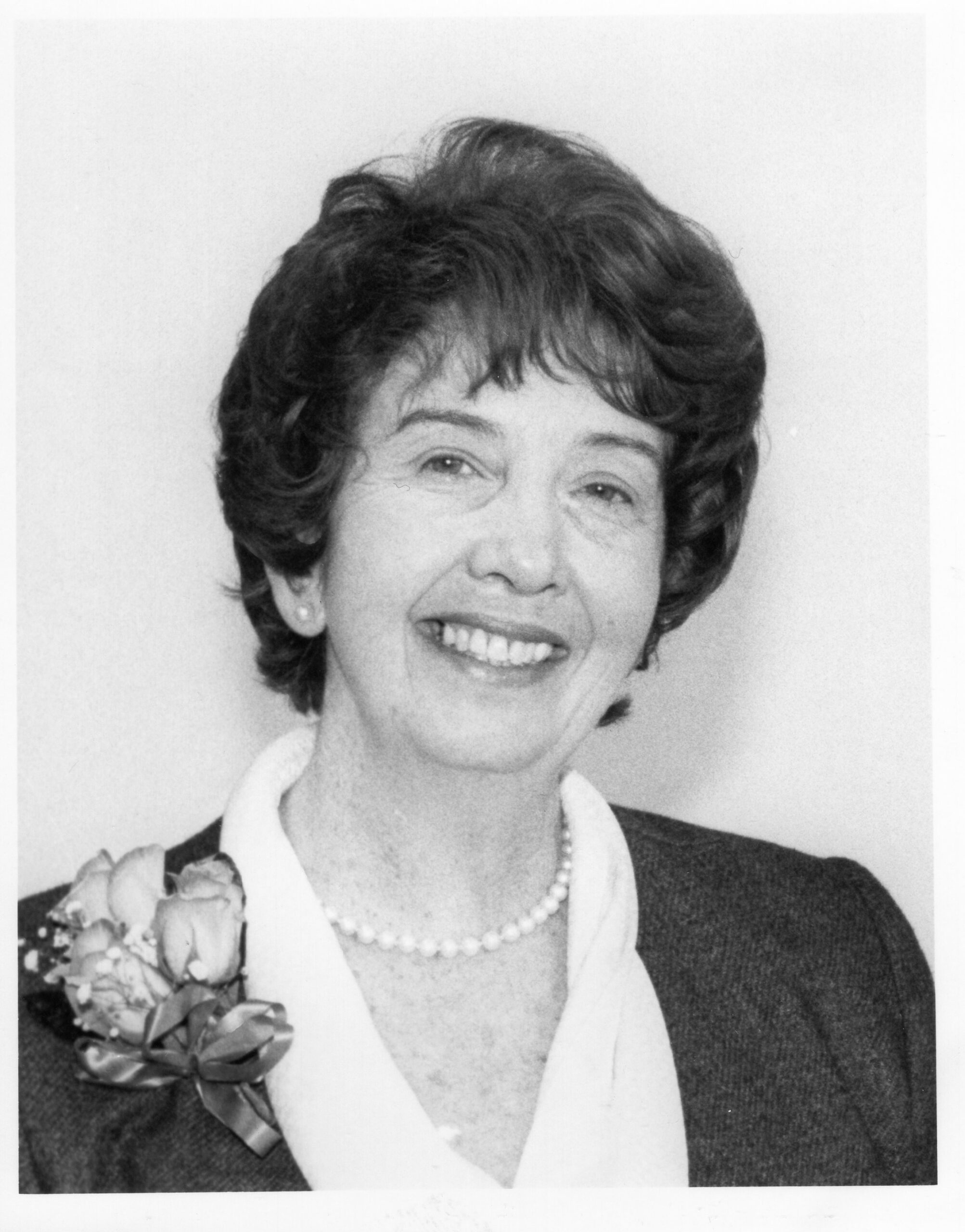
On a semi-regular basis, the blog will feature highlights from the INKA Archives at Boston College’s Burns Library. Visiting these documents allows us to reconnect with the scholars and practitioners whose work informed the foundations of INKA. As INKA continues to evolve, the Archives can help us root our language in its origins.
This month, we are highlighting a speech given by Dr. Marjory Gordon (September 19th, 1973) at the First National Conference on Classification of Nursing Diagnosis in St. Louis, Missouri, USA. All images and quotations from the report can be found at the Burns Library with the following citation: NANDA® -I records, MS.1998.006, First National Conference 1973 (binder 1), 12/16.
Over the course of INKA’s history, the organization’s biannual conferences have served as critical opportunities for collaboration and evolution. The dialogue and information shared at INKA’s biannual conferences have advanced nursing research and practice, which in turn shapes the curriculum that guides nursing education.
As INKA prepares for the 2027 conference in Spain and systematically rolls out NANDA 360, it is worth revisiting the organization’s first conference in 1973, where Dr. Gordon gave a speech about the relevance of nursing research to a classification system, and vice versa.
The following is the transcript of Dr. Gordon’s speech, with emphasis added.
I’d like to share some thoughts on two things: the relevance of a classification system for nursing research and the relevance of nursing research for a classification system. A taxonomy will contain words for describing states or the patient and these will be operationally defined in terms of signs and symptoms. One of the areas of research that this could facilitate is studies of the diagnostic process.
In my own research on diagnostic strategies, I studied the information nurses collected in diagnosing the presence or absence of surgical complications. In designing the study I went through many nursing and medical texts and failed to find common definitions of concepts, such as hemorrhagic shock. At this time, study of the diagnostic process in the psychosocial area presents even greater problems. An agreed upon nomenclature and operational definitions, that is, signs and symptoms, will facilitate the study of successful and unsuccessful strategies. This whole area of research has great importance in formal or continuing education and certainly, in nursing practice.
Secondly, if we had agreed upon categories and definitions, we could then study nursing actions. For example, if we agree as to what cluster of symptoms represents incomplete grieving, questions could be asked about what are the most effective interventions. This would open up a whole area of research on nursing therapy.
Definitions of nursing diagnoses and a classification system could lead to greater consistency across investigations. For example, I report from Boston a study of nursing actions in sensory deprivation, and an investigator in San Francisco reports a similar study. Are we both talking about the same state of the patient? Many times we are not and the research is not comparable.
A taxonomy also would contain a hierarchy of conceptual categories. At present, we don’t know at what level of conceptualization nurses are operating. Do they intervene on the basis of ”cyanosis” or at a higher level, “respiratory distress”? How is the level of conceptualization related to the quality of care? If we had a taxonomy we could determine if differences exist between nonprofessionals and professionals and also among levels of nursing professionals. Another variable that may be studied is the nursing specialty or clinical setting and its influence on the level of diagnosis attained.
These have been a few thoughts on the relevance of a taxonomy or classification system to research. I’d also like to share some ideas on the relevance of nursing research to the development of a taxonomy. For the past five days I’ve heard people talk about what should be the final recommendations regarding the diagnoses developed. I believe this group has the responsibility to at least consider the following points.
When a taxonomy is developed, what criteria will be used to determine that the diagnostic categories are useful ways of thinking about and describing the state of the patient? Are we going to recommend studies of the categories identified? For example, would the criteria for validity be opinion research? Should we suggest that a cross-sectional sample of nurses be surveyed to determine the usefulness in practice of the diagnoses we identified? Or, shall we suggest clinical trials to determine if these diagnoses are useful ways of thinking about and describing the state of the patient? Before we get to the stage of publishing a taxonomy these questions will have to be dealt with. Other nurses are going to ask what criteria were used in selecting nomenclature.
Secondly, it is [sic] important to obtain validation of category definitions? Is opinion research needed? Or, are operational definitions obtained by reviewing rwxrbooks and clinical research? This is another question that I have heard many in the group suggest we consider.
The third issue relates to the taxonomy of classification of nursing diagnosis. We’re going to arrange diagnoses into a hierarchy. How shall this be done? This is a broad concern but one that will have to be dealt with.
Lastly, I think that when we talk about research in this area we also have to be aware that there is a need for continued clinical research to identify previously unrecognized diagnostic categories. We talked about leaving open categories or open sets in any kind of computerized system for nursing diagnoses. We must encourage our expert practitioners to describe new clinical entities that can be placed in the taxonomy. Also, it may be that there are higher levels of conceptualization of a patient’s problem than is currently being utilized. Perhaps commonly occurring clusters of problems will only be identified through clinical research. One could study five hundred patients presenting with a particular problem, it may be found that certain other problems tend to cluster around it. In this way, higher-level categories in the taxonomy could be established.
Others probably have a number of other ideas. Would anyone like to share their ideas either on the subject of the relevance of a taxonomy for research or for the relevance of research for the taxonomy?
From the organization’s earliest days, Dr. Gordon and her peers recognized the interconnectedness of nursing research, nursing education, and nursing practice, and how the creation of a research-informed classification system would enhance all of these fields. Currently, these values have been realized through NANDA 360.
Dr. Gordon ended her 1973 speech by inviting the conference attendees to share their ideas, and we look forward to seeing you in Spain in 2027 to continue the conversation and share how NANDA 360 connects with nursing research, nursing education, and nursing practice.
Comments (2)
June 30, 2026
me interesa información en relación de la Dra. Gordon y INKA
July 1, 2026
Thank you for your interest in Dr. Marjory Gordon and INKA.
You may find our INKA Archives page helpful, as it provides information about the archival collection and how to access it:
https://nanda.org/inka-archives/
If you're interested in accessing archival materials or have questions about the collection, you can contact the Assistant Director of the Marjory Gordon Program:
Dr. Natalie Borg: gordonprogram@nanda.org
We appreciate your interest in the history of nursing knowledge!
Leave a comment