
Editor’s Introduction
This essay is a scholarly contribution from one of INKA’s current Gordon Scholars and explores an important question for nursing: As environmental changes increasingly influence human health, do our current nursing knowledge frameworks and nursing diagnoses fully capture those realities?
Across healthcare settings, nurses are seeing the effects of environmental change in patient care through extreme heat events, changing patterns of infectious disease, natural disasters, air quality concerns, food insecurity, and other factors that influence individual and community health. INKA has been actively engaged in these conversations through several NANDA®cast episodes focused on climate change and nursing, as well as through the work of the Climate Change Task Force.
Rather than offering definitive answers, the author invites readers to consider whether nursing may need new ways of understanding the relationship between human health and the environmental systems that sustain life. To support this discussion, the essay introduces the concept of humoplanetary health and explores its potential implications for nursing knowledge and nursing diagnosis.
The article is intentionally theoretical in nature and is presented as an invitation to dialogue rather than a final conclusion. Whether readers ultimately agree with the author’s proposal, the essay contributes to an important conversation about how nursing’s distinctive knowledge can continue to evolve in response to the changing conditions that shape health in the twenty-first century.
Nursing’s Distinctive Knowledge as a Transformative Force for HumoPlanetary Health
Throughout its historical trajectory, nursing’s distinctive knowledge has played a fundamental role in responding to humanity’s needs across diverse cultural, social, and political contexts. Its development has supported significant advances in addressing wars, pandemics, and other emerging and re-emerging health challenges, while also contributing to the organization and improvement of actions within increasingly interconnected and globally integrated health systems. Along this trajectory, nursing diagnoses have become established as important expressions of disciplinary knowledge, enabling the identification of phenomena relevant to professional practice and guiding the planning of care.
Contemporary scientific evidence has highlighted the growing magnitude of the challenges arising from global ecological transformations, whose effects directly and indirectly impact human health and the integrity of Earth’s natural systems. These phenomena increasingly reveal the interdependence of social, ecological, and biological systems, reinforcing the need for approaches capable of understanding and responding to the multiple interactions that characterize health at a planetary scale.
This scenario imposes an unavoidable challenge on nursing disciplinary knowledge: the need to transcend fragmented views of the person–environment relationship. In the context of planetary change, an understanding of human responses restricted to the individual, family, group, or community levels may be insufficient to apprehend the dynamic, interdependent, and multiscalar nature of the coconstitutive processes that permeate life. Therefore, it becomes necessary to expand the analytical frameworks capable of capturing the diversity and dynamism of the interactions emerging in this context, as well as to reexamine the phenomena that underpin nursing diagnoses in light of the contemporary demands of planetary health.
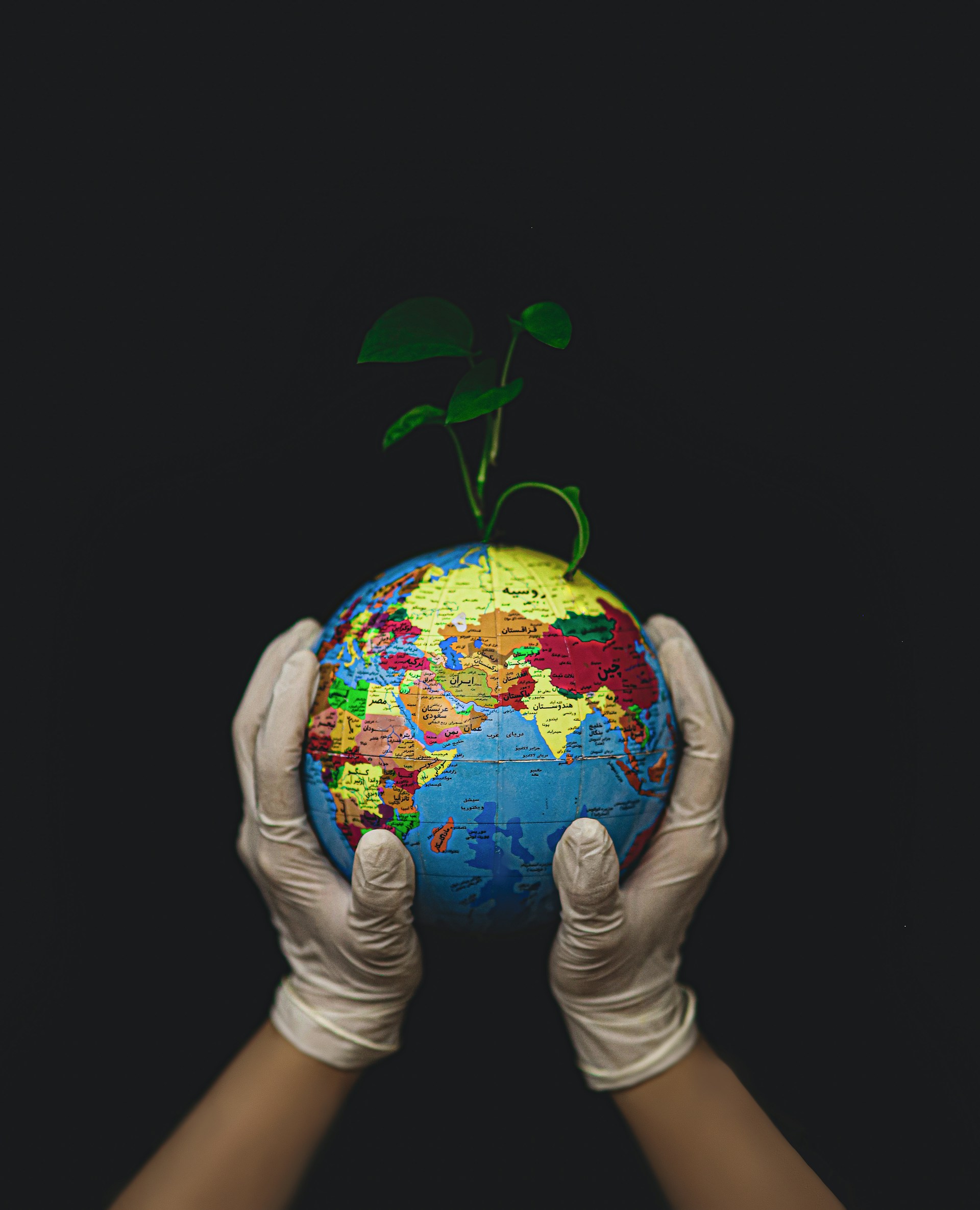
Historically, ontological positions that conceptualize nursing phenomena of interest through an exclusive focus on human beings have not been uncommon, relegating the environment to the status of an external stimulus or an etiological factor associated with lived experiences. However, responding to contemporary challenges requires an expansion of this conceptual horizon. Such a movement calls for epistemological advances grounded in ontological perspectives that recognize the integrity and unity of the human–environment process, enabling nurses to identify patterns, formulate diagnoses, plan actions, and actively contribute to the advancement of planetary health. These dimensions are conceived here as integrated through the concept of humoplanetary health, a term proposed in this essay to express the inseparable unity between human health processes and the planetary systems that sustain them. This concept seeks to overcome dualisms historically embedded in knowledge production and to reaffirm the unitary, interdependent, and coconstitutive nature of the processes that sustain life at a planetary scale. From this perspective, nursing diagnoses, as expressions of nursing’s distinctive knowledge, expand their focus from human responses in their environment context to the humoplanetary patterns within which such responses emerge, thereby broadening the disciplinary scope of nursing in addressing the ecological challenges of the twenty-first century.
A practical illustration may help clarify this distinction. Consider an individual who expresses a desire to adopt healthier eating habits and increase physical activity. Within conventional approaches, nursing assessment may focus primarily on the potential benefits of these behaviors for the person’s physical and psychological well-being. Through a humoplanetary health perspective, however, the phenomenon is understood within a broader pattern that simultaneously encompasses human health and planetary systems. The individual’s interest in consuming more plant-based foods, reducing food waste, choosing sustainably produced foods, engaging in active transportation, or increasing contact with natural environments is not viewed solely as a set of personal health behaviors, but as part of a dynamic process that reflects the mutual relationship between human flourishing and ecological sustainability.
From this perspective, nursing phenomena become identifiable not only through their implications for individual health outcomes, but also through their potential contributions to the integrity of the interconnected systems that sustain life. For example, a nursing diagnosis such as Readiness for Enhanced Planetary Health Self-Management recognizes a pattern of attitudes and behaviors oriented toward strengthening both personal and planetary well-being. This diagnosis, which will be submitted by the author to the Classification Development Committee, will be presented here as an illustrative example of how a humoplanetary perspective may inform the identification and conceptualization of nursing phenomena. The desire to conserve natural resources, improve water and energy efficiency, reduce waste production, enhance recycling, advocate for green spaces, reduce noise pollution, adopt renewable energy sources, participate in nature-based activities, or engage in more conscious digital consumption reflects more than environmental awareness. Rather, these manifestations express a humoplanetary pattern in which human health and planetary processes are understood as coconstitutive and inseparable dimensions of the same reality.
Such a perspective may also broaden the scope of nursing assessment and actions. Beyond assessing human responses alone, nurses may increasingly consider indicators of the human–environmental field that shape and are shaped by health processes, including characteristics of the built and natural environment, access to green spaces, local pollution levels, environmental degradation, climate-related exposures, geographical characteristics, and even patterns associated with resource consumption and carbon emissions. In this sense, nursing knowledge expands from understanding how environments affect health to recognizing how human and environmental processes continuously participate in the emergence of humoplanetary health patterns. Consequently, nursing assessment and knowledge development may encompass phenomena arising from the inseparable relationship between people and the planetary systems that sustain life.
From this perspective, the establishment of humoplanetary health as a new domain of nursing diagnosis may constitute a driving force for the epistemological advancement of the discipline. More than merely naming phenomena, nursing diagnoses express ontological commitments regarding what the profession recognizes as relevant to care and, consequently, to the production of disciplinary knowledge. By incorporating humoplanetary perspectives on health, these diagnoses may expand the boundaries of nursing knowledge and reposition the profession in addressing the challenges arising from global ecological transformations.
In this sense, humoplanetary health is proposed not simply as a new conceptual construct, but as an opportunity to strengthen nursing’s distinctive knowledge as a transformative force capable of informing actions and innovations across multiple scales of human and planetary life. Such a movement reaffirms nursing’s historical capacity to respond to the emerging demands of its time and signals a renewed professional contribution to the sustainability of the interconnected systems that sustain life on Earth.
Importantly, these conceptual propositions are not presented as absolute truths or definitive answers. Rather, they are offered as a theoretical invitation to expand disciplinary dialogue, stimulate epistemological reflection, and encourage new ways of understanding the phenomena of interest to nursing in the context of contemporary planetary challenges.
About the Author
Rafael Oliveira Pitta Lopes, PhD, RN, is a Professor at the Federal University of Rio de Janeiro in Brazil and a member of the current cohort of Gordon Scholars in The Marjory Gordon Program for Knowledge Development, Clinical Reasoning & Decision Making. Through this international program, a collaboration between the International Nursing Knowledge Association and the Boston College Connell School of Nursing, Gordon Scholars work with mentors and colleagues from around the world to advance assessment-driven, diagnosis-centered nursing knowledge and clinical reasoning, and NANDA 360. The Gordon Scholars’ work has informed practice, scholarship, policy, and instruction worldwide. Dr. Lopes’ current work focuses on the development of nursing theories and nursing diagnoses, with particular interest in advancing nursing knowledge through the Science of Unitary Human Beings (SUHB), especially in the areas of planetary health, climate change, and chronic diseases.
Comments (0)
Leave a comment