
Editor’s Note
This article is part of a monthly series highlighting the impact of research supported by the International Nursing Knowledge Association (INKA) Foundation.
Through the generosity of donors, the Foundation supports nursing research that strengthens clinical reasoning, nursing knowledge development, and evidence-informed practice. Cristina Barradas, RN, MSc, received Foundation support for Decisional Conflict among Families of Critically Ill Patients: Conceptual and Qualitative Validity Study of the Nursing Diagnosis.
In this article, Barradas shares how Foundation funding supported her doctoral research, including advanced training in qualitative data analysis and opportunities to disseminate findings through scientific publications, presentations, and international conferences. The research has generated conceptual and qualitative evidence to support the development and refinement of nursing diagnostic knowledge and has now progressed to an expert validation phase.
If you would like to support the work of the INKA Foundation and help make future nursing research possible, please visit https://nanda.org/support-inka-foundation/.
Recognizing Decisional Conflict in Critical Care
Critically ill patients cannot always speak for themselves.
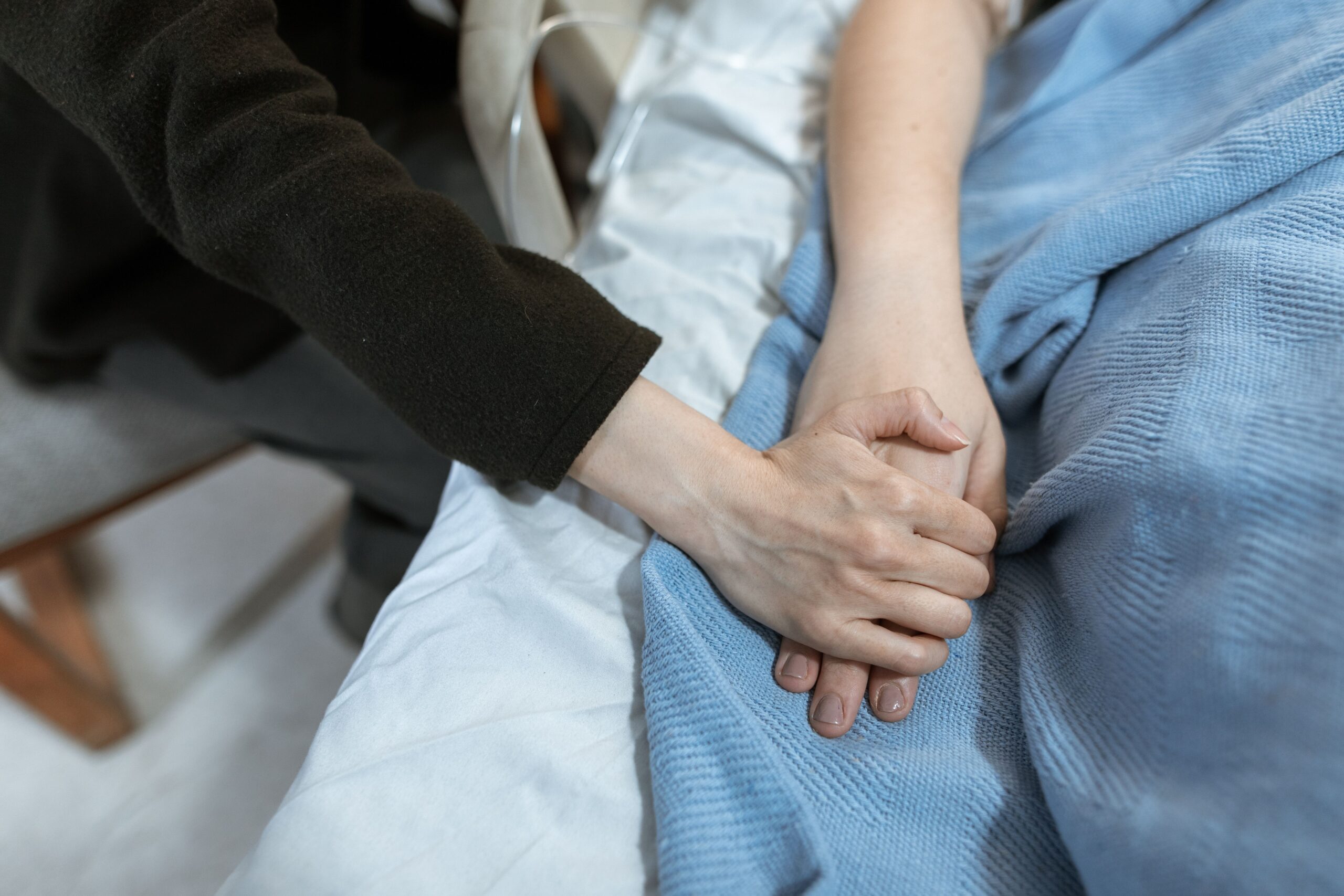
When that happens, a family member may suddenly be asked to make decisions they never expected to face: whether treatment should continue, whether an intervention reflects what their loved one would want, or whether they are making the “right” decision on someone else’s behalf.
Research shows that these situations can generate significant uncertainty and emotional strain. In a pilot study of surrogate decisionmakers in a medical intensive care unit, Miller et al. (2016) found greater decisional conflict among those making end-of-life decisions than among those making other decisions. More recent qualitative research has described experiences including tension between rationality and emotion, uncertainty about the patient’s wishes, regret, and reduced confidence in decision-making (Lei et al., 2025).
As a nurse researcher, I am interested not simply in whether families find these decisions difficult, but in understanding what that difficulty actually looks like as a nursing phenomenon. What characteristics allow us to recognize decisional conflict? What factors contribute to it? And how can we develop nursing knowledge that helps clinicians distinguish it from the many other emotional responses a family may experience during critical illness?
These questions are at the center of my doctoral research.
Defining What Nurses Need to Recognize
My project, Decisional Conflict among Families of Critically Ill Patients: Conceptual and Qualitative Validity Study of the Nursing Diagnosis, focuses on the conceptual and qualitative validation of decisional conflict among families of critically ill patients.
My aim is to analyze conceptual and qualitative evidence of decisional conflict in this population, contributing to the advancement of nursing knowledge and supporting the development of a clinically relevant nursing diagnostic concept.
The first stage involved a comprehensive concept analysis. Through this work, I identified key antecedents, defining attributes, consequences, related terms, and referents associated with decisional conflict.
I then conducted a qualitative study with family members involved in complex decision-making in intensive care settings. This allowed me to examine the phenomenon through the experiences of families themselves and to identify defining characteristics and related factors relevant to decisional conflict.
Bringing these two forms of evidence together has enabled me to develop a preliminary diagnostic structure grounded in both concept analysis and qualitative findings. The project has now moved into an expert validation phase, where I am assessing the relevance and representativeness of those findings.
Why Greater Precision Could Change Practice
The goal is not simply to create or refine a diagnostic label.
For nurses, recognizing that a family is struggling is only the beginning. We also need to understand the nature of that struggle and the factors contributing to it if we are to assess and respond to it appropriately.
The wider literature suggests that decisional conflict is not simply a problem of insufficient information. A systematic review and meta-analysis by Xing et al. (2024), for example, found that decision aids improved family members’ knowledge but did not significantly reduce decisional conflict.
That finding raises an important question. A family may understand the choices available to them and still feel deeply conflicted about what to do.
This is why defining the phenomenon more precisely is potentially valuable for nursing. If we can identify its defining characteristics and related factors more clearly, nurses may be better equipped to recognize decisional conflict consistently, distinguish it from other forms of distress or uncertainty, and communicate their clinical judgment about what a family is experiencing.
This work does not, by itself, tell us which nursing actions will improve outcomes for these families. But developing a stronger diagnostic knowledge base is an important step toward being able to develop and test nursing approaches that are better matched to the human response we are trying to address.
For me, that connection between conceptual clarity and clinical relevance is central to the project.
What Foundation Support Enabled
The INKA Foundation grant has provided valuable support at an important stage of my doctoral research.
In particular, the funding enabled me to undertake advanced training in qualitative data analysis. This enhanced the rigor, credibility, and transparency of my study and strengthened my ability to analyze the experiences shared by participating families.
The grant has also supported opportunities for scientific dissemination and will help facilitate the future presentation and publication of findings as the study progresses.
These opportunities are an important part of developing research. Training strengthens the methods we use to generate evidence, while conferences and publications allow findings to be discussed, questioned, shared, and built upon by the wider scientific community.
Preliminary results from my concept analysis were presented at the 20th International Nursing Research Seminar, organized by Universidade Católica Portuguesa – Centro Regional do Porto, in Porto, Portugal, in 2026.
A manuscript, Decisional Conflict Among Families of Critically Ill Patients: Evolutionary Concept Analysis Based on a Scoping Review, is currently under review, and I am preparing a second manuscript reporting the findings of the qualitative study. My next phase of work is focused on expert validation of the diagnostic structure.
Supporting Research While It Is Still Becoming Something
Research impact is often easiest to see at the end: a published article, a new resource, a change in practice.
But support can be especially valuable much earlier, while the evidence is still being built.
For doctoral students and early-career researchers, financial support contributes not only to the conduct of high-quality research, but also to international dissemination, scientific collaboration, and the development of future nursing knowledge.
That has been my experience with the INKA Foundation grant.
The support has allowed me to strengthen the methodological quality of my research while creating opportunities to share the work internationally. Ultimately, my hope is that this project will contribute to strengthening nursing diagnostic science and to a clearer understanding of an experience faced by families during some of the most difficult moments of critical illness.
There is still work to be done. But that is also why supporting research at this stage is so valuable: it gives promising nursing questions the opportunity to become stronger evidence, and stronger evidence the opportunity to become useful nursing knowledge.
If you would like to support the work of the INKA Foundation and help make future nursing research possible, please visit https://nanda.org/support-inka-foundation/.
References
Lei, Y., Sui, W., Chen, L., Zhou, Q., & Zhuang, Y. (2025). The experience of surrogate decision-making and deciphering critically ill patient values: A qualitative study. Nursing in Critical Care, 30(3), e13171. https://doi.org/10.1111/nicc.13171
Miller, J. J., Morris, P., Files, D. C., Gower, E., & Young, M. (2016). Decision conflict and regret among surrogate decision makers in the medical intensive care unit. Journal of Critical Care, 32, 79–84. https://doi.org/10.1016/j.jcrc.2015.11.023
Xing, Y., Cai, W., Wang, A., Yuan, Y., & Zhang, R. (2024). Effectiveness of decision aids on critically ill patients’ outcomes and family members’ knowledge, anxiety, depression and decisional conflict: A systematic review and meta-analysis. Nursing in Critical Care, 29(6), 1303–1315. https://doi.org/10.1111/nicc.13115
About the Author
Cristina Barradas, RN, MSc, is a PhD Candidate at Universidade Católica Portuguesa, Faculty of Health Sciences and Nursing, in Portugal.
Her Foundation-supported research, Decisional Conflict among Families of Critically Ill Patients: Conceptual and Qualitative Validity Study of the Nursing Diagnosis, explores decisional conflict among families of critically ill patients and aims to contribute to the development of a clinically relevant nursing diagnostic concept.
Preliminary findings from the work were presented at the 20th International Nursing Research Seminar in 2026. A manuscript reporting the project’s evolutionary concept analysis is currently under review, and a further manuscript reporting findings from the qualitative study is in preparation.
Comments (0)
Leave a comment