Login Cart

Innovation

Nursing Innovation

Cart Login Join INKA

Innovation in Nursing Knowledge and Practice

Definition and Importance

Innovation is about creating value through change. It is not simply having a new idea; it is turning that idea into something useful that makes life better, easier, faster, safer, cheaper, or more meaningful.

In nursing, innovation is often associated with technology. But nursing innovation also includes new ways of thinking, new ways of teaching, new ways of documenting care, and new ways of strengthening clinical reasoning. Some of the most meaningful innovations in nursing are not devices or apps; they are improvements in how nurses make decisions, communicate professional judgments, and deliver safe and consistent care.

INKA (formerly NANDA® International) views innovation as essential to nursing’s future because nursing practice depends on both human expertise and strong knowledge infrastructure. When nursing knowledge is clear, structured, and usable, nurses are better equipped to improve outcomes for individuals, families, and communities.


What Makes an Idea Become Innovation?

An idea becomes innovation when three elements come together:

  1. A problem or unmet need
  2. A novel approach (a new technology, a new process, or a new way of thinking)
  3. A real-world impact

If these three elements do not happen, it is only an idea. If an innovation is not adopted, it remains only an idea.

This is particularly important in nursing, where adoption depends on factors such as workload, time pressure, professional training, organizational policies, and digital system limitations. Innovation in nursing must be practical. It must support clinical reasoning, not distract from it.

Types of Innovation

There are different types of innovation, including:

  • Incremental innovation: Small improvements over time
  • Disruptive innovation: Changes the game by making something simpler or more accessible
  • Radical innovation: Breakthroughs that create entirely new possibilities
  • Process innovation: New ways of doing things

Innovation can also be:

  • Social innovation: New ways to address social problems
  • Business-model innovation: Changes in how value is delivered
  • Cultural innovation: Rethinking how teams collaborate, communicate, and make decisions

Sometimes the most meaningful innovations are not about tools; they are about how people work together and how knowledge is organized.

nurse speaking to group

What Fuels Innovation?

Several forces commonly fuel innovation:

  • Curiosity: Asking “why?” and “what if?”
  • Constraint: Limited time or resources often spark creativity
  • Failure: Most innovations come from iterations that did not work at first
  • Diverse perspectives: Innovation thrives on cross-disciplinary and cross-cultural collaboration

In nursing, these drivers are especially relevant. Nurses work in environments where constraints are constant. Clinical decisions must be made quickly, often under pressure, and frequently with incomplete information. Nurses also work across cultures, disciplines, and health systems, creating natural opportunities for innovation through shared experience.

Innovation in Nursing Starts With Empathy

Nursing innovation does not start with genius. It usually starts with empathy.

Instead of asking:

“What’s a great idea?”

Innovators ask:

“What’s broken, frustrating, slow, or unclear, and why?”

This is especially true in nursing. Nurses are often the first to identify problems in care delivery because they are the professionals closest to the patient’s daily experience. When documentation systems fail, when care plans are disconnected from reality, or when nursing language lacks clarity, nurses experience the consequences immediately.

Innovation in nursing begins by acknowledging these realities and addressing them systematically.

Why Innovation Matters for Nursing Knowledge

Nursing is a knowledge discipline. Nurses make decisions based on assessment, pattern recognition, clinical reasoning, and professional judgment.

Innovation in nursing must therefore address more than workflow efficiency. It must strengthen the knowledge structures nurses use to think.

This includes:

  • How nursing diagnoses are defined and updated
  • How diagnoses are organized within classification structures
  • How assessment frameworks support diagnostic accuracy
  • How nurses prioritize diagnoses in real clinical contexts
  • How nursing knowledge becomes visible in documentation and data

Nursing diagnoses represent evidence-based clinical judgments about human responses. But those judgments depend on high-quality assessment, valid reasoning, and consistent classification systems.

When any part of this chain weakens, nursing becomes harder to teach, harder to document, harder to measure, and harder to defend as a distinct professional contribution.

Innovation in nursing knowledge is therefore foundational, not optional.

Innovation in Nursing Education

Nursing education is one of the most powerful environments for innovation because it shapes how nurses learn to reason.

Aligning curricula with structured nursing knowledge domains allows students to understand nursing phenomena systematically rather than memorizing disconnected facts. Strong diagnostic reasoning education helps nurses recognize patterns, analyze assessment data, and make sound clinical judgments.

Innovations in education can include:

  • Improved clinical reasoning teaching models
  • Structured approaches to diagnostic reasoning
  • Consistent use of standardized nursing diagnoses in case-based learning
  • Clear linkage between assessment frameworks and diagnostic accuracy

When education reflects strong nursing knowledge structures, graduates enter practice with greater confidence and clarity.

nurse helping patient

Innovation in Clinical Practice

In practice, innovation must support nurses functioning under real-world constraints, including:

  • Time pressure
  • High patient complexity
  • Incomplete information
  • Fragmented digital systems
  • Variation in care environments

Innovations that support nurses in identifying priorities, clarifying what matters most in the moment, and planning care realistically across an episode of care can improve safety and reduce missed care.

Effective nursing innovation in clinical settings strengthens, not replaces, professional judgment.

Innovation in Digital Health and Documentation

Digital health environments introduce both opportunity and risk.

Electronic health records can strengthen nursing visibility when nursing diagnoses and related knowledge structures are integrated properly. Structured documentation can support continuity of care, measurement of outcomes, and analysis of nursing contributions.

However, poorly designed systems can reduce nursing work to checkboxes and obscure clinical reasoning.

Innovation in digital environments must support:

  • Clear documentation of nursing diagnoses
  • Structured data reflecting nursing judgment
  • Clinical decision support that enhances reasoning
  • Continuity across transitions of care
  • Interoperability with broader health information systems

When implemented thoughtfully, digital innovation can amplify nursing knowledge rather than dilute it.

futuristic image of nurse touching a digital display

The Nursing Language Challenge That Sparked Innovation

Examining the fragmented state of nursing language systems with empathy and curiosity led to a major evolution within INKA: the development of NANDA 360.

This work reflects an effort to move beyond isolated classifications toward a more integrated and clinically usable structure for nursing knowledge.

NANDA 360 and the Future of Nursing Knowledge Infrastructure

NANDA 360 is positioned as an expanded classification and clinical reasoning framework designed to strengthen how nursing knowledge is structured, applied, and advanced.

It builds on existing nursing diagnosis classification foundations while extending linkages to outcomes, patient goals, and evidence-informed nursing actions. The intent is to support clinical reasoning, care planning, documentation, education, and research within a more coherent knowledge architecture.

NANDA 360 is not simply a technological innovation. It represents a structured evolution in nursing knowledge infrastructure, intended to support:

  • Clinical reasoning
  • Nursing education
  • Care planning and management
  • Research and outcome measurement
  • Digital implementation and interoperability

As with any innovation, its real impact depends on adoption, implementation, and ongoing refinement.

Innovation Requires Adoption

A critical test of innovation is adoption. If nurses cannot use it, educators cannot teach it, or digital systems cannot implement it, it will not produce meaningful impact.

Innovation in nursing knowledge must be:

  • Clinically meaningful
  • Educationally teachable
  • Digitally implementable
  • Adaptable across countries and health systems
  • Structured enough for consistency and flexible enough for real practice

For a global association like INKA, nursing innovation must function across diverse health systems and cultural contexts.

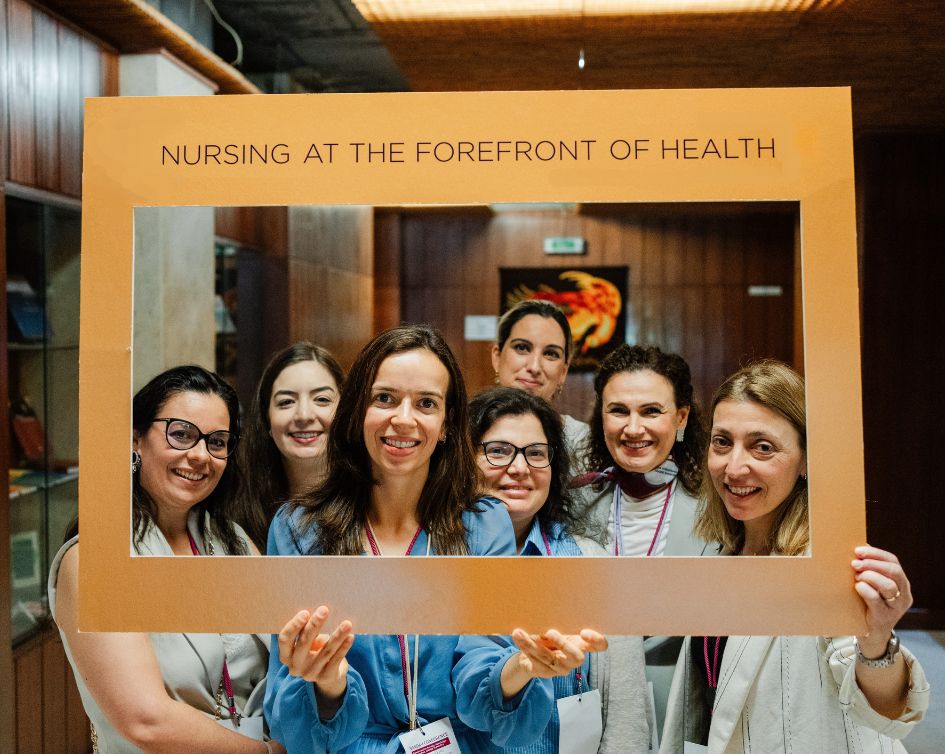
nurses holding banner saying "nursing at the forefront of health"

Conclusion

Innovation in nursing is not simply about new tools. It is about solving real problems, using thoughtful approaches, and creating meaningful impact.

In nursing, innovation begins with empathy and is sustained by disciplined knowledge development. It includes improvements in assessment, diagnostic reasoning, classification systems, education, documentation, and digital integration.

INKA’s work, including the development of NANDA 360, reflects a commitment to strengthening nursing knowledge infrastructure so that nurses worldwide can practice with clarity, confidence, and measurable impact.

Suggested Next Step

To learn how INKA advances the development and implementation of assessment-driven, diagnosis-centered nursing knowledge, explore:

Nursing Diagnoses: Definitions and Classification

NANDA 360

Join INKA

Join INKA to elevate your voice in the development, refinement, and global adoption of evidence-based nursing knowledge.

Join INKA