Login Cart

NANDA – Definitions & Classification

NANDA Nursing Diagnosis Book

Cart Login Join INKA

NANDA-I Nursing Diagnoses: Definitions and Classification

Nursing diagnosis is a central expression of nursing’s clinical judgment and a foundational element of the nursing process. It provides the professional foundation for identifying human responses to health conditions and life processes, guiding autonomous nursing judgment and ensuring that nursing care is visible, evidence-based, and clinically accountable.

The NANDA-I Nursing Diagnoses: Definitions and Classification text has long served as the definitive reference for this work. Maintained through the global community of experts within INKA (formerly NANDA® International, NANDA-I), this publication represents the most current, peer-reviewed nursing diagnosis classification book available to the profession. And now, beginning with the 14th edition, it also provides patient outcome statements for each diagnosis, along with goals and nursing actions.

More than a book of diagnostic labels, this is a foundational clinical and scholarly resource. It supports shared nursing language, strengthens diagnostic and clinical reasoning, and advances nursing practice across acute care, community settings, education, informatics, research, and policy.

INKA’s role is to steward and advance this classification as part of a broader commitment: ensuring that nursing knowledge remains assessment-driven, diagnosis-centered, scientifically grounded, and globally relevant.


Purchase and Translations

The current edition of NANDA-I Nursing Diagnoses: Definitions and Classification (2024–2026) is available for purchase through our publishing partners. This text remains the primary reference for the nursing diagnosis classification maintained by INKA (formerly NANDA International, NANDA-I).
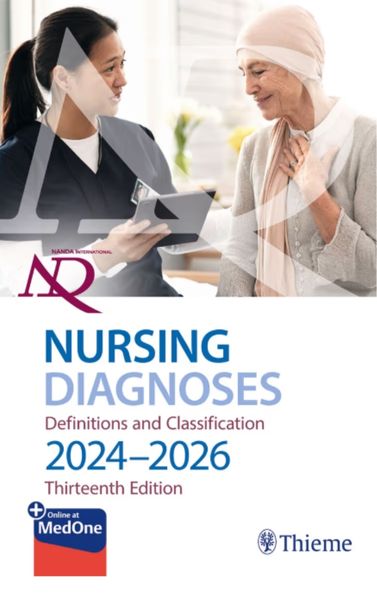
 

NANDA-I Nursing Diagnoses: Definitions and Classification

Current Edition (English)

NANDA-I Nursing Diagnoses: Definitions and Classification, 2024–2026

Publication date: April 2024

→ Purchase the current edition: https://shop.thieme.com/NANDA-I-International-Nursing-Diagnoses/9781684206025

INKA members, please log in to the Member Portal to receive your member discount.


Available Translations

Translations of the current edition are published through international partners. Please note that member discounts do not apply to translated versions.

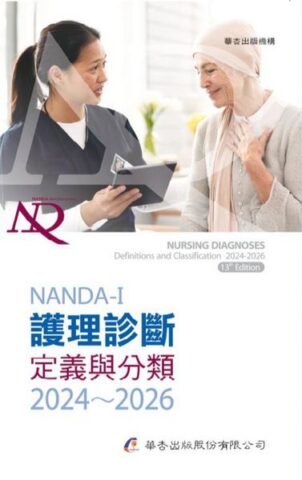
Chinese (Traditional Characters) Translation

NANDA-I Nursing Diagnoses: Definitions and Classification- Chinese

Nursing Diagnoses: Definitions and Classification, 2024–2026

→ Purchase the Traditional Chinese edition: 護理診斷:定義與分類 2024–2026

https://www.farseeing.com.tw/?p=7377

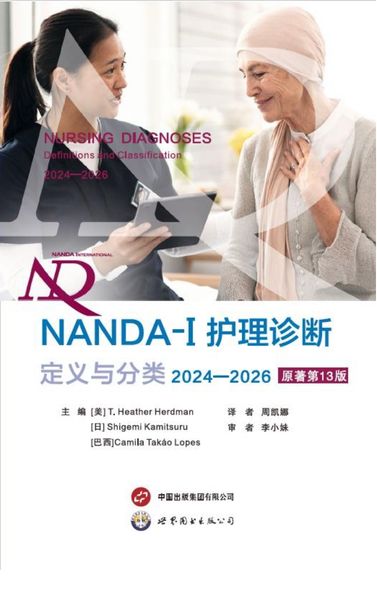
Chinese (Simplified Characters) Translation

NANDA-I Nursing Diagnoses: Definitions and Classification- Chinese

Nursing Diagnoses: Definitions and Classification, 2024–2026

→ Purchase the Simplified Chinese edition: 护理诊断:定义与分类 2024–2026

https://shop286299021.v.weidian.com/item.html?itemID=7535286056&wfr=decoration-qrcode_wxh5&spider_token=12ec&ifr=itemdetail&state=H5WXshareOld&distributorId=1387292027&share_relation=040966bb3e37ec18_1387292027_1

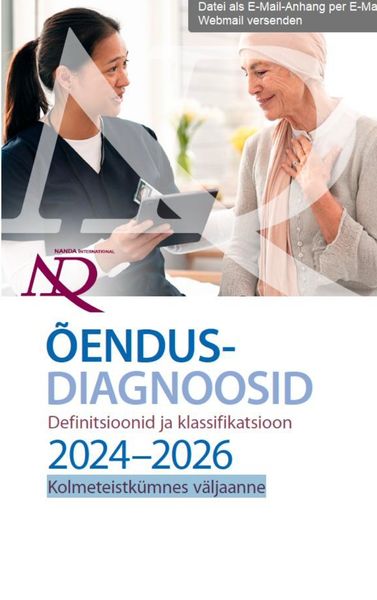
Estonian Translation

NANDA-I Nursing Diagnoses: Definitions and Classification- Estonian

Nursing Diagnoses: Definitions and Classification, 2024–2026

→ Purchase the Estonian edition: Õendusdiagnoosid: Definitsioonid ja klassifikatsioon 2024–2026

https://www.ttk.ee/et/nanda-i

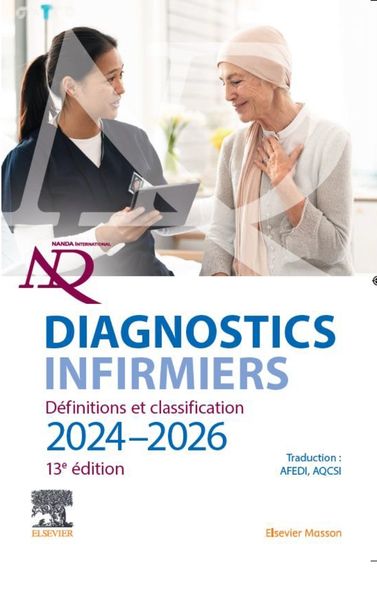
French Translation

NANDA-I Nursing Diagnoses: Definitions and Classification- French

Nursing Diagnoses: Definitions and Classification, 2024–2026

→ Purchase the French edition: Diagnostics infirmiers : Définitions et classification 2024–2026

https://www.elsevier-masson.fr/diagnostics-infirmiers-2024-2026-9782294787355.html?nosto=nosto-page-search1

German Translation

NANDA-I Nursing Diagnoses: Definitions and Classification- German

Nursing Diagnoses: Definitions and Classification, 2024–2026

→ Purchase the German edition: Pflegediagnosen: Definitionen und Klassifikation 2024–2026

https://shop.thieme.de/NANDA-I-Pflegediagnosen-Definitionen-und-Klassifikation-2024-2026/9783897521698

Greek Translation

NANDA-I Nursing Diagnoses: Definitions and Classification- Greek

Nursing Diagnoses: Definitions and Classification, 2024–2026

→ Purchase the Greek edition: Νοσηλευτικές Διαγνώσεις: Ορισμοί και Ταξινόμηση 2024–2026

https://www.brokenhill.com.cy/eng/product/Nanda-Nosileytikes-Diagnoseis-Orismoi-kai-Taksinomisi24-26-Dienth

Indonesian Translation

NANDA-I Nursing Diagnoses: Definitions and Classification- Indonesian

Nursing Diagnoses: Definitions and Classification, 2024–2026

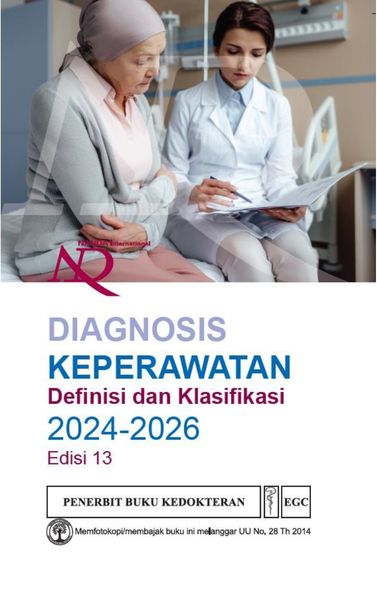
→ Purchase the Indonesian edition: Diagnosis Keperawatan: Definisi dan Klasifikasi 2024–2026

https://egcmedbooks.com/buku/detail/2781/diagnosis-keperawatan-nanda-2024-2026-ed13

Italian Translation

NANDA-I Nursing Diagnoses: Definitions and Classification- Italian

Nursing Diagnoses: Definitions and Classification, 2024–2026

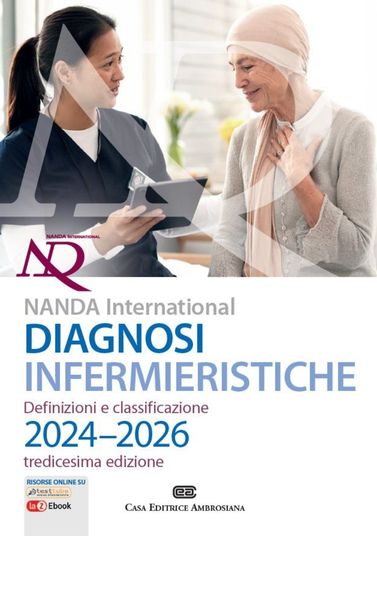
→ Purchase the Italian edition: Diagnosi infermieristiche: Definizioni e classificazione 2024–2026

www.zanichelli.it/ricerca/prodotti/006014D75FBB1DA9C1258AD7003310B0

Japanese Translation

NANDA-I Nursing Diagnoses: Definitions and Classification- Japanese

Nursing Diagnoses: Definitions and Classification, 2024–2026

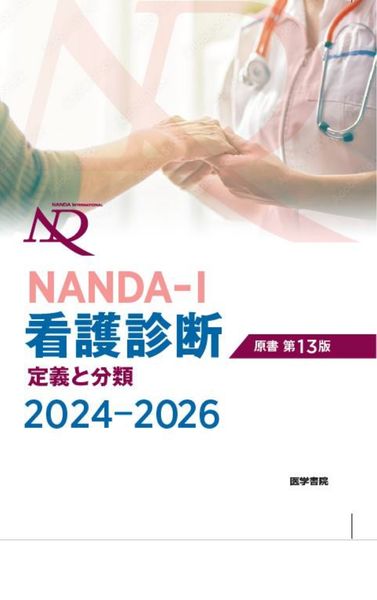
→ Purchase the Japanese edition: 看護診断:定義と分類 2024–2026

https://www.igaku-shoin.co.jp/book/detail/115380

Korean Translation

NANDA-I Nursing Diagnoses: Definitions and Classification-Korean

Nursing Diagnoses: Definitions and Classification, 2024–2026

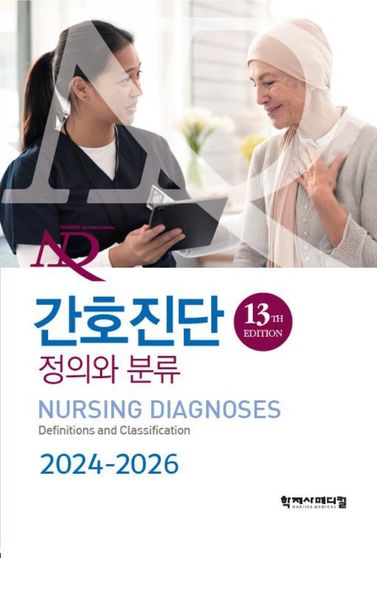
→ Purchase the Korean edition: 간호진단: 정의와 분류 2024–2026

https://www.hakjisamd.co.kr/subpage.html?page=book_book_info&bidx=835

Portuguese Translation

NANDA-I Nursing Diagnoses: Definitions and Classification-Portuguese

Nursing Diagnoses: Definitions and Classification, 2024–2026

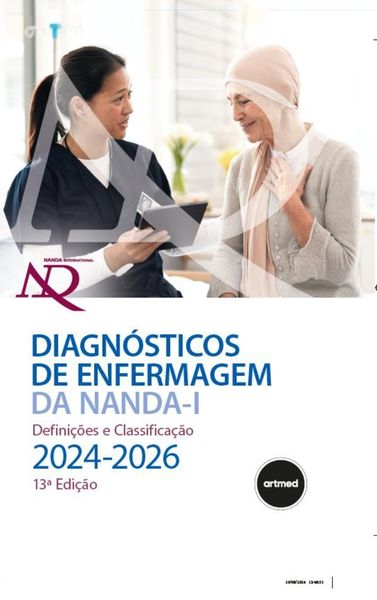
→ Purchase the Portuguese edition: Diagnósticos de Enfermagem: Definições e Classificação 2024–2026

https://m.loja.grupoa.com.br/grupoa-hlg-hc/diagnosticos-de-enfermagem-da-nanda-i-definicoes-e-classificacao-2024-2026-ebook-p1051596

Spanish (European Spanish Edition) Translation

NANDA-I Nursing Diagnoses: Definitions and Classification-Spanish

Nursing Diagnoses: Definitions and Classification, 2024–2026

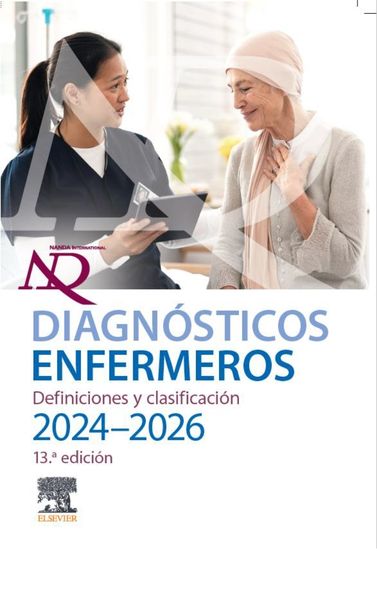
→ Purchase the European Spanish edition: Diagnósticos enfermeros: Definiciones y clasificación 2024–2026

https://tienda.elsevier.es/diagnosticos-enfermeros-definiciones-y-clasificacion-2024-2026-9788413827612.html

Spanish (Latin American Spanish Edition) Translation

NANDA-I Nursing Diagnoses: Definitions and Classification-Spanish

Nursing Diagnoses: Definitions and Classification, 2024–2026

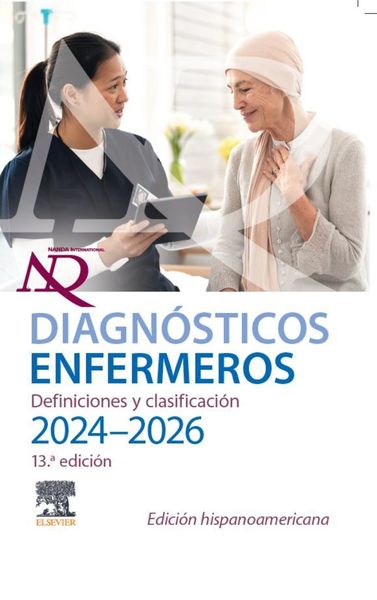
→ Purchase the Latin American Spanish edition: Diagnósticos enfermeros: Definiciones y clasificación 2024–2026 (Edición Hispanoamericana)

https://tienda.elsevier.es/diagnosticos-enfermeros-definiciones-y-clasificacion-2024-2026-edicion-hispanoamericana-9788413828527.html

Turkish Translation

NANDA-I Nursing Diagnoses: Definitions and Classification-Turkish

Nursing Diagnoses: Definitions and Classification, 2024–2026

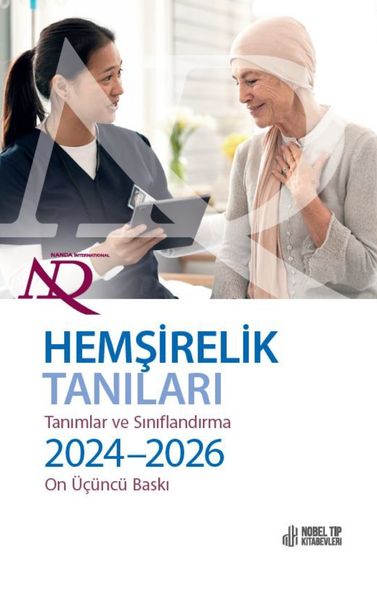
→ Purchase the Turkish edition: Hemşirelik Tanıları: Tanımlar ve Sınıflandırma 2024–2026

https://www.nobeltip.com/urun/hemsirelik-tanilari-tanimlar-siniflari

Dutch Translation

Nursing Diagnoses: Definitions and Classification, 2024–2026

Publication date: Coming soon

Slovenian Translation

Nursing Diagnoses: Definitions and Classification, 2024–2026

Publication date: Coming soon

What’s Included in the Current Edition

Each edition of NANDA-I Nursing Diagnoses: Definitions and Classification reflects the most current approved diagnostic knowledge from the INKA community.

Updates include:

New and Revised Nursing Diagnoses

The classification continues to expand as new human responses are identified, validated, and approved through submission and review.

Updated Diagnosis Labels

Revisions ensure diagnosis labels remain consistent with current literature and reflect nursing’s focus on human response.

Modified Definitions

Definitions have been updated across the vast majority of diagnoses, including risk diagnoses, to improve clarity and clinical usability.

Standardized Diagnostic Indicator Terms

The text strengthens understanding by standardizing key diagnostic components:

  • Defining characteristics
  • Related factors
  • Risk factors
  • Associated conditions
  • At-risk populations

This supports nurses, educators, informaticians, and researchers in applying diagnoses accurately across contexts.

Web-Based Resources

Supplemental online materials include chapter resources and reference lists to support learning and clinical implementation.


How Nurses Use NANDA International Nursing Diagnoses: Definitions & Classification

NANDA International Nursing Diagnoses: Definitions & Classification supports nursing practice by making clinical judgments visible, consistent, and teachable. It helps nurses identify and name human responses to health conditions and life processes, strengthening clinical reasoning, documentation, communication, and research.

Nurses in Practice

In clinical settings, standardized nursing diagnoses support accurate, diagnosis-centered clinical reasoning and consistent documentation. A shared classification helps nurses identify priorities, communicate clearly across care teams, and strengthen continuity of care across transitions.

nurse educator teaching students

Nurses in Education

In nursing education, standardized nursing diagnoses provide a structured foundation for teaching assessment, clinical reasoning, and professional judgment. They support consistent curriculum design, simulation, case-based learning, and evaluation.

Nurses in Public Policy

For policy leaders, standardized nursing diagnosis classification strengthens visibility of nursing contributions in quality frameworks, safety initiatives, population health strategies, and workforce planning.

nurses talking while looking at computer screen

Nurses in Research

In research, standardized nursing diagnoses enable consistent measurement and comparison across settings and populations. They support validation studies, refinement of diagnoses, and development of nursing science.

Nurses in Informatics and EHR Implementation

In informatics and electronic health record implementation, standardized nursing diagnoses support structured documentation and interoperable nursing data. When integrated effectively, they strengthen visibility of nursing judgment and enable meaningful analysis of nursing contributions to outcomes and safety.

group of young nurses

Definition and Importance

NANDA-I Nursing Diagnoses: Definitions and Classification is the authoritative guide to nursing diagnoses as developed, reviewed, and approved through INKA’s Diagnosis Development Committee (DDC), now Classification Development Committee (CDC).

The NANDA nursing diagnosis book supports nurses in answering a core clinical question: What is the patient’s human response, and what nursing care is required?

Because diagnosis is the clinical starting point of professional nursing practice, the NANDA-I classification has become essential for:

  • Nursing assessment and clinical decision-making
  • Documentation and care planning
  • Education and competency development
  • Research and outcomes measurement
  • Global interoperability and health informatics alignment

This classification reflects the evolving science of nursing knowledge. Each diagnosis is defined, structured, and supported by diagnostic indicator terms that allow nurses worldwide to apply diagnostic concepts with consistency and clinical clarity.

At its core, this work reinforces nursing’s distinct contribution: naming and addressing human responses to health and life processes through autonomous nursing judgment.

nurse talking to patient

Clinical and Operational Relevance of the NANDA-I Classification

Accurate nursing diagnosis strengthens care at every level of practice.

At the point of care, nurses rely on diagnostic reasoning to identify priorities such as:

  • Impaired mobility
  • Risk for infection
  • Ineffective coping
  • Compromised family processes
  • Readiness for enhanced self-management

These judgments shape care planning, communication, and the selection of nursing interventions grounded in professional standards.

In operational and systems contexts, standardized nursing diagnoses allow organizations to:

  • Improve documentation quality and comparability
  • Strengthen clinical decision support tools
  • Advance nursing-sensitive outcomes measurement
  • Demonstrate nursing’s unique contribution within interdisciplinary care

This is especially important internationally, where healthcare systems differ, but the need for assessment-driven, diagnosis-centered clinical reasoning remains universal.

The NANDA-I nursing diagnosis book enables nurses to articulate what nursing uniquely addresses: not medical pathology alone, but the lived human experience of health, illness, recovery, and response.

Standards and Evidence Context

The nursing diagnosis classification is not static. It is governed by professional review processes, evidence priorities, and ongoing refinement.

INKA’s Diagnosis Development Committee (DDC) ensures that each diagnosis included in the classification meets standards for:

  • Conceptual clarity
  • Clinical relevance
  • Research support
  • Global applicability
  • Consistency with nursing knowledge development

Recent editions reflect major advances in diagnostic science and practice alignment, including deeper integration of diagnostic reasoning frameworks and greater standardization across diagnostic content.

Kamitsuru’s Tripartite Model of Nursing Practice

This edition expands discussion of diagnosis and its linkage to assessment and intervention through Kamitsuru’s Tripartite Model, which differentiates:

  • Interdependent interventions, shaped by medical and organizational standards of care
  • Autonomous nursing interventions, grounded in nursing standards of care

This distinction reinforces diagnosis as the foundation of independent nursing clinical judgment, not simply a documentation requirement.

Functional Health Patterns as an Assessment Framework

The text also uses Functional Health Patterns to guide nurses in collecting meaningful clinical data and strengthening diagnostic accuracy.

This supports clearer linkage between:

  • Assessment findings
  • Defining characteristics
  • Related or risk factors
  • Associated conditions
  • At-risk populations

Diagnosis is not a label, but a structured clinical conclusion based on evidence-informed nursing assessment.

Ontology, Classification, and Taxonomy in Nursing Diagnosis

Standardized Nursing Language (SNL) is a unified, approved vocabulary used to consistently document nursing assessments, nursing diagnoses, patient goals outcomes, and nursing actions or interventions. It provides a common, structured terminology or set of classifications that enables clear communication, improves data accuracy, and highlights nursing’s specific contribution to patient care across various settings. Within this umbrella term of SNL, we include classifications and taxonomies, although these are distinct from one another.

The NANDA-I classification is increasingly important in digital and informatics contexts, where nursing knowledge must be represented clearly within health information systems.


nurse on computer

The text includes expanded discussion of:

  • Ontology: how diagnostic concepts are represented within knowledge systems
  • Taxonomy: how diagnoses are organized conceptually
  • Classification: how nursing knowledge is structured for clinical use

These foundations matter because nursing diagnoses are now embedded in:

  • Electronic health record systems
  • Standardized nursing data environments
  • Global interoperability efforts
  • Research databases and emerging clinical reasoning technologies

The classification’s axial structure, which has undergone significant revision, is explained in detail to ensure transparency and conceptual rigor.

Through this work, INKA supports both clinical usability and the long-term integrity of nursing knowledge in digital practice environments.

futuristic image of nurse touching patient data screen

Future Direction: NANDA 360 and the Evolution of Classification

INKA’s work is advancing toward the next major evolution: NANDA 360.

NANDA 360 is an expanded and unified set of classifications with a digital (web-based) clinical reasoning framework, designed to extend beyond the diagnosis classification alone.

NANDA 360, which will be released with the 14th edition of the Definitions and classification text, extends the classification to incorporate patient goals (at the diagnostic label level) and patient outcomes (at the defining characteristic / risk factor level). These are paired with evidence-based nursing actions, linked directly to the indicators of each nursing diagnosis, and providing a GRADE score for nurses to easily identify the level of evidence available for each particular action.

NANDA 360 will provide one taxonomy that categorizes information representing nursing diagnoses, patient goals and outcomes, and nursing actions.

However, it is important to note:

  • The NANDA 360 publication will not be available until 2027
  • Current editions remain focused on nursing diagnosis classification
  • NANDA-I Nursing Diagnoses: Definitions and Classification continues to be the foundational reference for diagnosis today

This publication therefore remains essential for nurses, educators, researchers, and organizations building diagnosis capability now, while preparing for future expansion in nursing knowledge infrastructure.

Read More Read Less
nurse in foreground with medical team in background

Suggested Next Step

To learn more about the NANDA-I classification and its next evolution visit:

Join INKA

Join INKA, where nurses transform clinical judgment into shared knowledge that improves patient care worldwide.

Memberships